
Mystery of The Sailing Stones
Penulis: Jeyano Zaidan Enggelete – Universitas kristen Indonesia
Nature is full of unusual phenomena that can surprise people, even studied academics. An example is the sailing stones of Death Valley, rocks that appear to move across a desert floor without any human interference. These rocks leave meters-long trails behind them, creating a mysterious sight that has attracted the attention of scientists and visitors for decades. Their movement raises a question. How can heavy rocks move across a dry lakebed on their own?
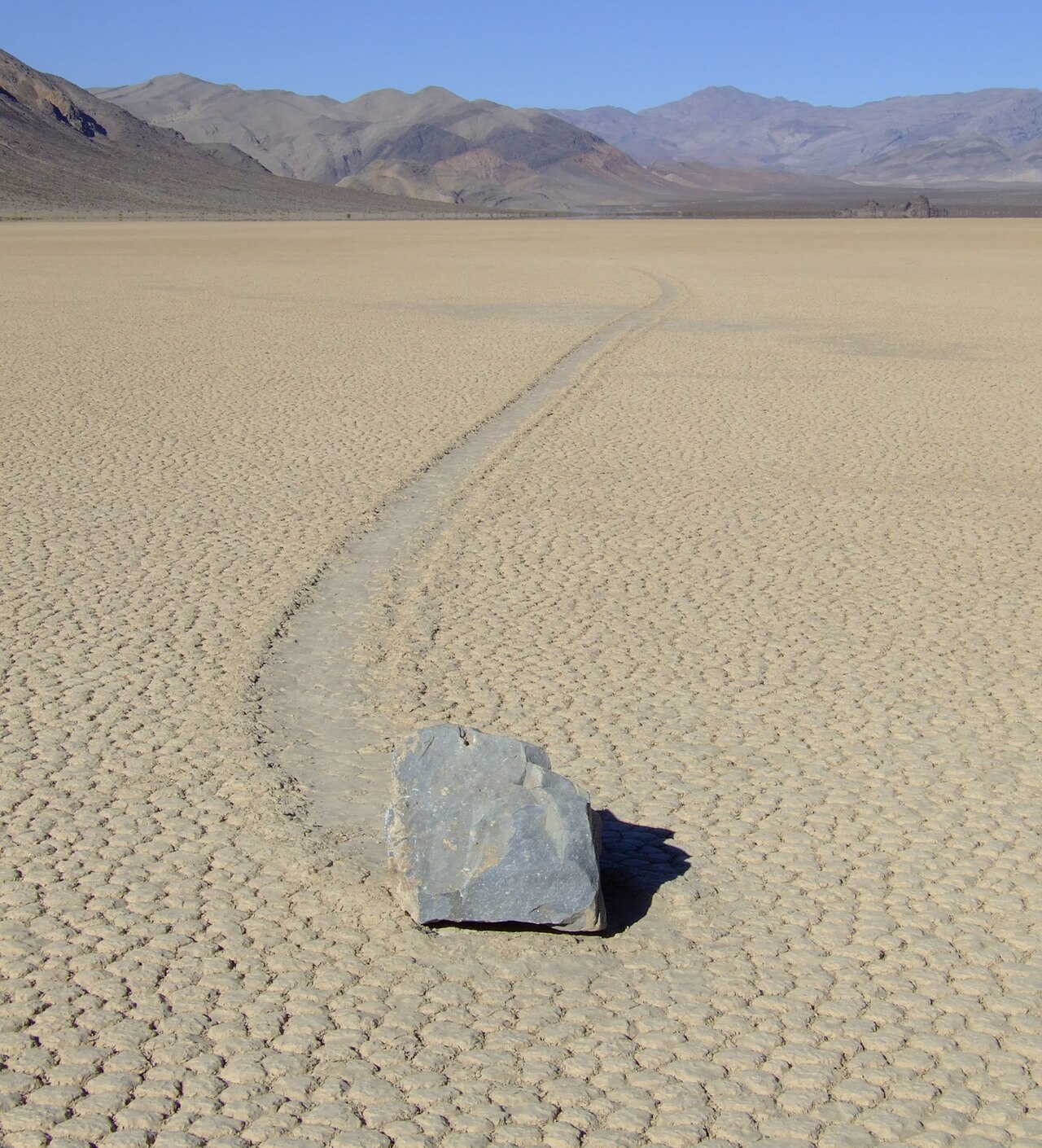
The Location of the Sailing Stones
The sailing stones are found at Racetrack Playa in Death Valley National Park, California, United States. Racetrack Playa is a dry lakebed surrounded by mountains and known for its remarkably flat surface. During most of the year, the area is dry, but rain can occasionally create a thin layer of water across the ground. The region also experiences significant temperature changes, which can cause water to freeze during cold nights.
These environmental conditions play an important role in the movement of the stones. The flat surface makes the trails left behind by the stones clearly visible, allowing researchers to study the paths left behind by the rocks.
The Mystery Behind the Moving Rocks
For many years, the movement of the sailing stones puzzled scientists and visitors. Some rocks weigh several kilograms or more, yet their trails suggest that they have moved across the lakebed. Because nobody regularly witnessed the rocks moving, it was difficult to determine exactly what caused their movement.
Several theories were proposed to explain the phenomenon. Some people believed that strong winds pushed the rocks across the ground, while others suggested that water or ice played a role. Although these explanations seemed possible, scientists needed concrete evidence to understand how the different environmental factors worked together.
The mystery continued until researchers were able to observe the stones moving under specific weather conditions. Their findings demonstrated that the explanation involved a combination of water, ice, and wind rather than a single force acting alone.
The Explanation
The movement of the sailing stones can be explained by a combination of natural processes. First, rainwater collects on Racetrack Playa, forming a shallow layer of water across parts of the lakebed. When temperatures drop below freezing, this water can form thin sheets of ice around and near the rocks.
As the temperature rises, the ice begins to break into floating panels. Light winds can push these panels across the shallow water, and the moving ice can exert enough force to move rocks slowly across the muddy surface. As the rocks travel, they leave trails in the soft sediment beneath them.
In 2014, researchers published a scientific study documenting the movement of the sailing stones. They used GPS devices attached to some rocks, weather measurements, and time-lapse cameras to investigate the phenomenon. Their observations showed that even relatively light winds could move rocks when the conditions were right. This research helped solve a mystery that had remained unexplained for generations.
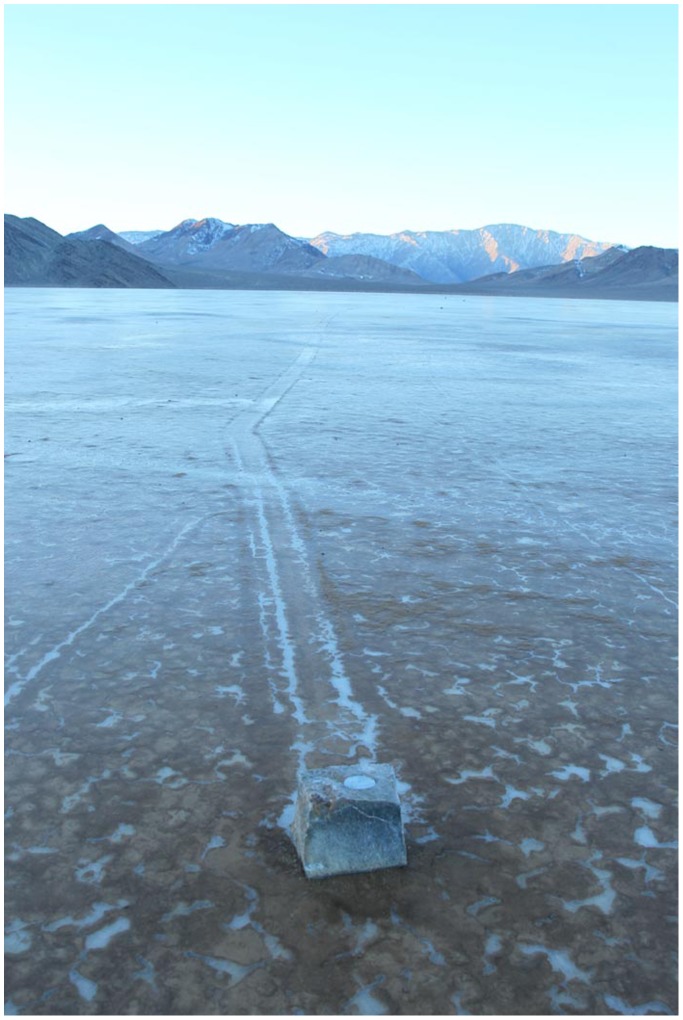
The Trails of the Stones
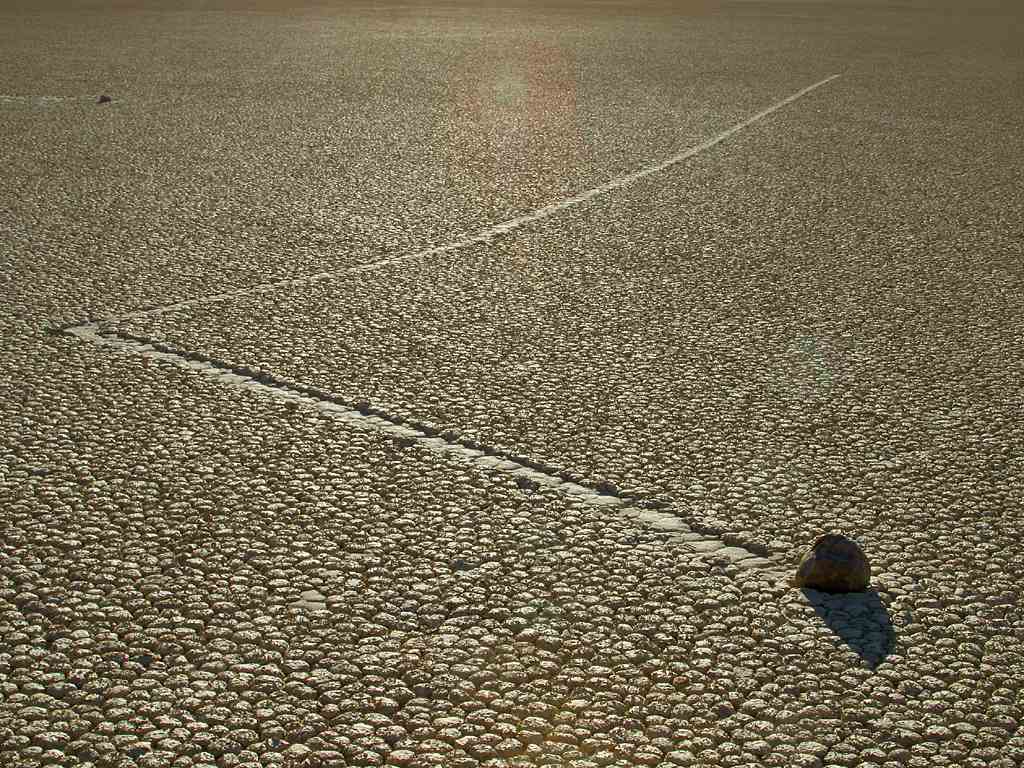
One of the most recognizable features of the sailing stones is the long trail each rock can leave behind. These trails may appear straight, curved, or winding across the surface of Racetrack Playa. Some trails extend for several meters, while others follow different directions depending on the movement of the rocks.
The trails form when moving rocks scrape across the soft sediment on the lakebed. Their shapes and lengths provide clues about how far the rocks have travelled and the directions in which they have moved. By studying these marks, researchers can better understand the forces involved in the process.
The trails are also important because they provide visible evidence of a phenomenon that is difficult to observe directly. Without these marks, scientists would have had a harder time identifying the movement of the rocks and developing explanations for it.
The Importance of Scientific Research
The sailing stones demonstrate the importance of scientific observation and experimentation. For decades, their movement appeared mysterious because people did not witness it happening. Instead of accepting assumptions without evidence, researchers investigated the environment and collected information until they could develop a convincing explanation.
Modern technology has made it easier for scientists to study natural phenomena that occur infrequently or under specific conditions. GPS tracking, cameras, and weather instruments allowed researchers to record the movement of the rocks and identify the conditions responsible for it.
This example also encourages people to think critically about unusual events. Something that initially appears impossible may have a logical explanation that becomes clear through careful observation and research. The sailing stones offer an opportunity to learn how scientific knowledge develops and why evidence is essential for understanding the natural world.
The story of the sailing stones reminds us that mysteries can inspire important scientific discoveries. By remaining curious and questioning what we observe, we can develop a deeper and greater understanding of the world around us.
Produk Rekomendasi Sunday





*****

Dapatkan informasi mengenai kesehatan mental, edukasi seksual, dan tips pelajar hanya di Majalah Sunday, teman curhat remaja Indonesia.
Ikutan berkarya di
Konten Lainnya
Terbaru
Terbaru
Dengerin Podcast
Penasaran? Yuk, tonton sekarang di YouTube!
Terpopuler
Terpopuler
Sub Sub Judul 2 atau Html 4
(Tidak harus ada keyphrase di setiap sub judul)
paragraph isi
(di setiap paragraf isi gak perlu ada keyphrase)
Views: 1