
The Ancient Stories of Pleiades
Penulis: Jeyano Zaidan Enggelete – Universitas Kristen Indonesia
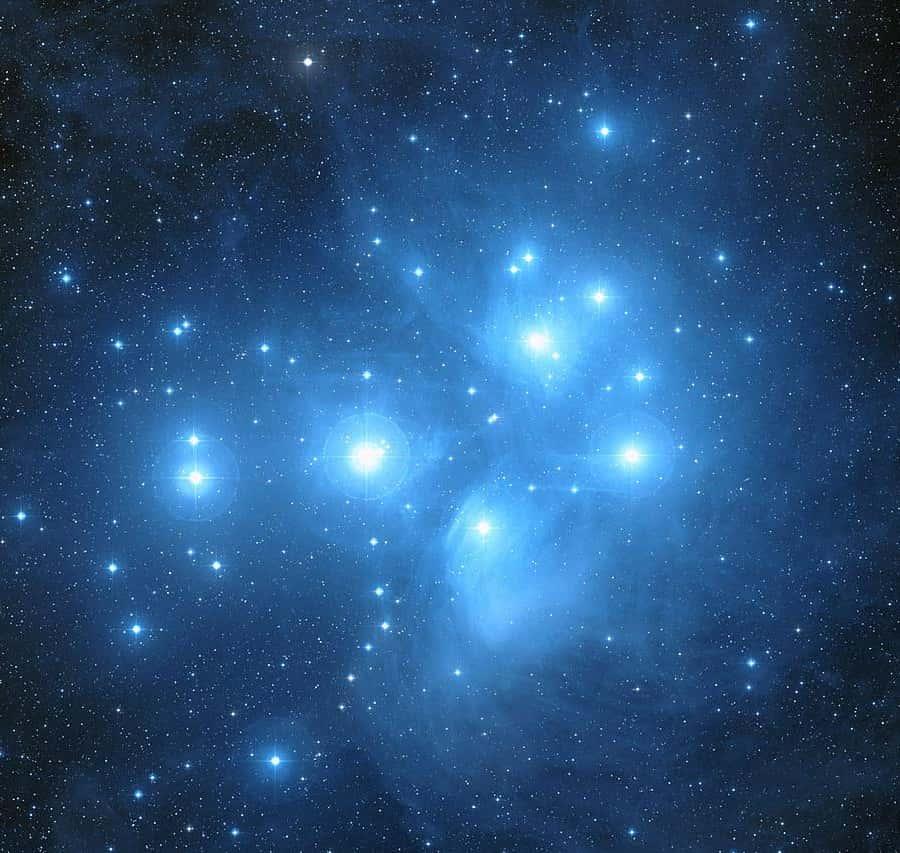
The Pleiades, also known as the Seven Sisters, is one of the most recognizable star clusters in human history. The ancient stories of Pleiades reveal how different civilizations developed their own myths, names, and traditions around this small group of stars. From ancient Greece to Indigenous communities in Australia and the Americas, traditions connected to the Pleiades appeared across cultures separated by vast distances.
These traditions raise a question, how did the same group of stars become important to so many different societies? Their stories can provide clues about the age of human traditions, the ways ancient communities understood the natural world, and the connections that may have existed between distant populations. Exploring the Pleiades therefore reveals an ancient astronomical tradition, culture, migration, and connection.
The Ancient Origins of the Seven Sisters
Human fascination with the Pleiades goes back thousands of years. Because the cluster is bright, compact, and easily recognizable, it could be observed without any astronomical instruments.
Written traditions has provided evidence of the Pleiades’ importance in the ancient world. In Greek mythology, the Pleiades became the seven daughters of Atlas and Pleione: Maia, Electra, Alcyone, Taygete, Celaeno, Sterope, and Merope. In different versions of the myth, Zeus placed the sisters among the stars, sometimes to protect them from Orion.
However, the Greek story should not automatically be treated as the beginning of the Seven Sisters tradition. The stars were observed by many societies outside Greece.
The Seven Sisters Across Ancient Cultures
The most remarkable aspect of the Pleiades is how frequently the cluster appears in traditions from different parts of the world. The details vary considerably, but the stars repeatedly receive human identities.
In Greek mythology, they are the seven daughters of Atlas and Pleione. Their story involves Zeus, Orion, and their transformation into stars. One explanation for the cluster’s name is therefore directly connected to a family of sisters.
Far from Greece, other cultures developed their own interpretations. Among Indigenous Australian traditions, the Pleiades have been associated with groups of young women or girls, while Orion can appear as a male figure pursuing them.
Similar ideas can also be found among Indigenous peoples of North America. For example, the Dakota, Lakota, and Nakota associate the Pleiades with Seven Girls, while the Navajo call the cluster Dilyéhé and connect its seasonal appearance with planting and harvesting. Other Indigenous cultures have completely different names and interpretations for the same stars.
The Pleiades also appear in Polynesian traditions. One Polynesian story, for example, explains the cluster as the result of a single star being broken into pieces by the god Tāne. Instead of seven sisters, the stories emerge from an entirely different origin.
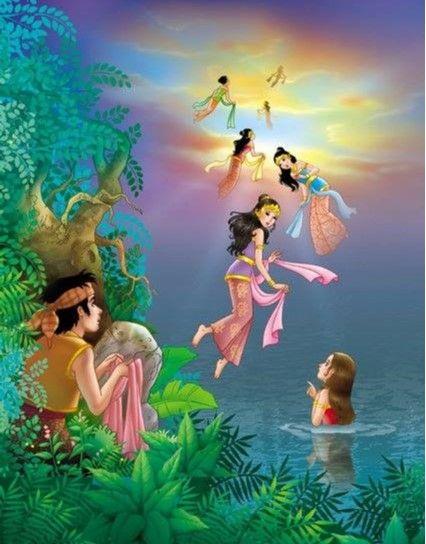
In Javanese tradition, the Pleiades are associated with Lintang Kartika, or the constellation of Kartika, and have been incorporated into traditional knowledge concerning the agricultural calendar. The star cluster is also the basis of the legend of Jaka Tarub. In which, seven angels came down to bathe on earth and he, Jaka Tarub, stole one of the angels’ shawls and then went on to marry the shawless angel.
The Stars Behind the Story
The reason the Pleiades inspired so many stories may begin with their unusual appearance.
The cluster is an open star cluster, meaning its stars formed together from the same cloud of gas and dust. Although more than a thousand stars are associated with the cluster, only a handful are easily visible without optical equipment. Under dark skies, people with good eyesight can sometimes see than six or seven stars.
This creates an interesting mystery, why are they called the Seven Sisters when many people can see only six stars?
Different cultures developed different explanations. In Greek mythology, Merope is sometimes described as the faintest sister because she married a mortal. In some Aboriginal Australian traditions, the seventh girl is hidden, abducted, or otherwise separated from the others. The recurring idea of a “missing” seventh member is especially interesting because it appears in cultures that developed their traditions independently of the Greek myth.
The Pleiades were also useful beyond mythology. Their position and seasonal visibility made them valuable as natural markers. Ancient Mediterranean societies associated their appearance with sailing seasons, while other cultures used the cluster to mark agricultural or seasonal changes. For people without modern calendars, regularly appearing stars could provide a practical way to understand the passing of the year.
A Connected Ancient World
The similarities between Pleiades traditions raise an even bigger question, how did similar ideas appear in cultures separated by enormous distances?
One possibility is cultural contact. Ancient people were not completely isolated communities. Humans migrated, traded, and exchanged ideas across large regions long before modern transportation existed. Stories could travel with them, changing as they passed from one community to another.
The Pleiades provide an especially interesting example because they are visible from almost every part of the globe. This means that people living thousands of kilometers apart could independently observe the same striking group of stars.
There is even a much more ambitious hypothesis. Researchers have proposed that similarities between Greek and Indigenous Australian stories about the Pleiades and Orion might preserve elements of a story that originated extremely far back in human history, potentially around 100,000 years ago. The hypothesis suggests that early humans could have carried a story with them as populations migrated out of Africa and eventually reached different parts of the world. However, this remains a hypothesis rather than an established fact, and critics have pointed out that similar stories could also have developed independently as they make no mention of seven sisters. Like the Polynesian myth.
The Pleiades offer a small glimpse into a much larger, well connected ancient world.
Today, the Pleiades remain a link between the ancient world and the present, even as modern conditions have changed how easily they can be seen in many places. Their stories preserve evidence of how earlier societies understood their environment and passed knowledge between generations. Exploring these traditions can therefore offer a different way to understand the ancient world, as a world where people, ideas, observations, and stories could travel across remarkable distances.
Produk Rekomendasi Sunday





*****

Dapatkan informasi mengenai kesehatan mental, edukasi seksual, dan tips pelajar hanya di Majalah Sunday, teman curhat remaja Indonesia.
Ikutan berkarya di
Konten Lainnya
Terbaru
Terbaru
Dengerin Podcast
Penasaran? Yuk, tonton sekarang di YouTube!
Terpopuler
Terpopuler
Post Views: 1