
Who Cares If I’m Pretty If I Fail My Finals?
5 Exam Prep Tips From Rory Gilmore of Gilmore Girls
Penulis: Lois Costantine Daneswara – Universitas Kristen Indonesia
“Who cares if I’m pretty if I fail my finals?”
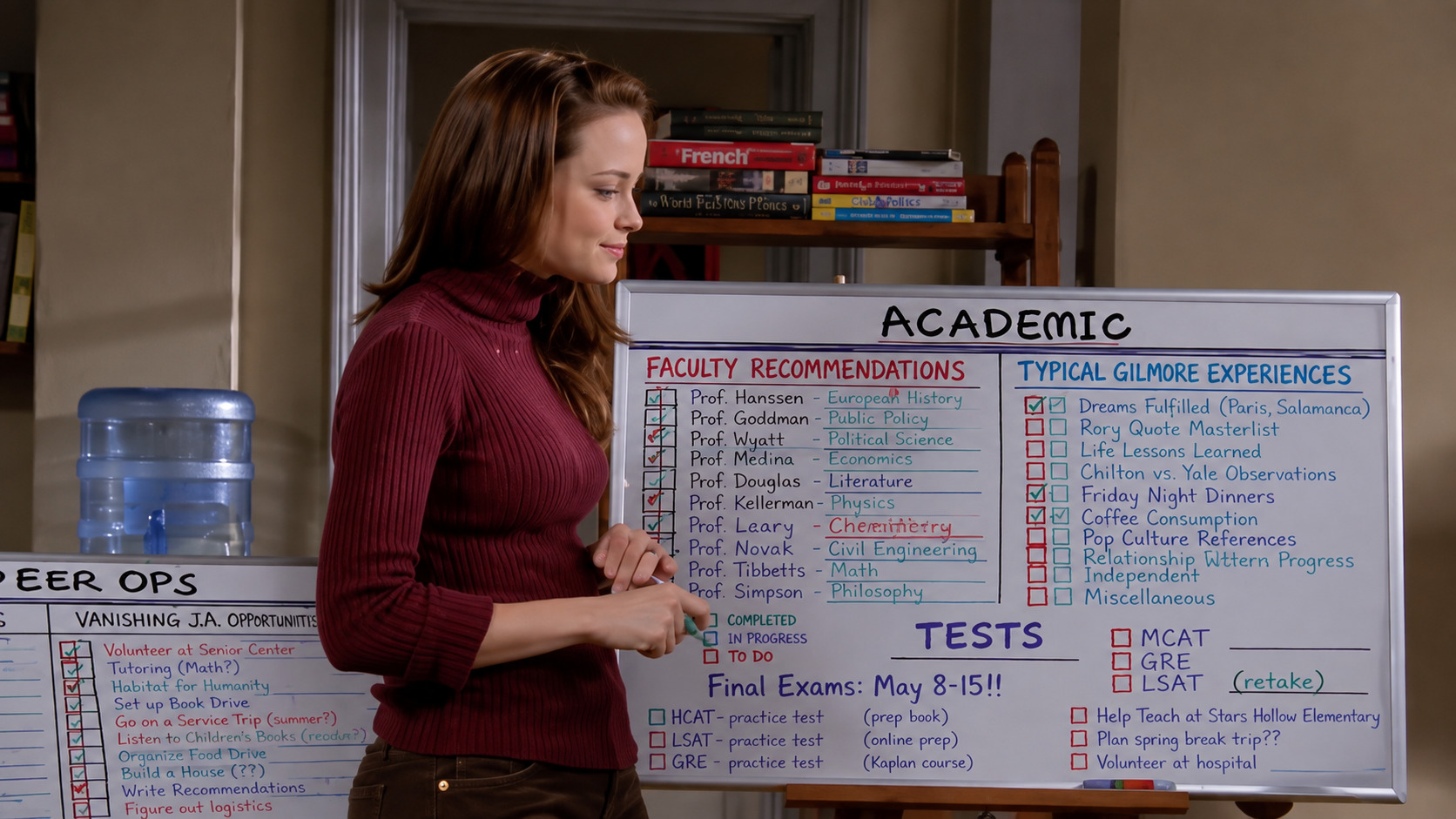
If you’ve ever watched Gilmore Girls, you probably know that Rory Gilmore takes studying very seriously. With her endless stack of books, color-coded notes, and determination to get into Harvard, Rory is basically the ultimate study-girl icon.
But you don’t need to live in Stars Hollow, attend Chilton, or have a Rory-level reading list to borrow some of her study habits. As finals get closer, her approach to studying can actually inspire some practical habits for students today, especially if you’re tired of last-minute cramming and all-nighters.
So, grab your favorite drink, put your phone away for a moment, and let’s study like Rory. Here are five Rory Gilmore-inspired exam prep tips you can try before your next finals.
Start Early, Don’t Wait Until the Night Before
One of the biggest lessons from Rory’s study habits is that she doesn’t treat studying as something you can magically finish overnight.
When exams are approaching, it can be tempting to tell yourself, “I’ll start tomorrow.” Then tomorrow becomes the next day, and suddenly you’re staring at an entire semester’s worth of material at 11 p.m.
Instead, start studying before the pressure becomes overwhelming.
You don’t have to spend five hours every day studying. Even 30–60 minutes of focused review can make a difference when you do it consistently. Break your material into smaller sections and set realistic daily goals.
For example, instead of saying, “I need to study everything for my history final.” Try this: “Today, I’ll review Chapter 1 and make notes on the three main topics.”
Small goals make studying feel less intimidating and they give you a sense of progress.
Rory-inspired rule: Don’t wait for panic to become your study schedule.
Read and Read
Rory Gilmore and books are practically inseparable. Whether she’s reading for school or simply working her way through an impressive reading list, reading is a huge part of her character.
And while you probably don’t need to read every book Rory ever touched, there’s a lesson here: actually engage with your study material.
Instead of only rereading your slides the night before an exam, try actively reading your textbooks, lecture notes, articles, or assigned materials. Active reading makes studying more meaningful than simply letting your eyes move across a page.
If you’re studying a difficult subject, don’t be afraid to read the same section more than once. Research suggests that rereading can make difficult materials easier to understand and can improve comprehension (Margolin & Snyder, 2018). Sometimes understanding comes after the second or even third read.

Make Your Own Study Notes
There’s something satisfying about sitting down with a notebook and turning a mountain of information into something you can actually understand.
Instead of copying everything word-for-word, create your own version of the material. You could make short summaries, mind maps, flashcards and you can also add a color to your notes to make it more interesting to read.
But, the key is to process the information rather than simply copy it. You can rewrite it in language you actually understand. Studies show that putting things into your own words can make them easier to understand and help you learn them better (Chi et al., 1994).
Don’t worry about making your notes look perfect. Your notes are meant to help you study, not win an aesthetic competition on Pinterest.

Create a Distraction-Free Study Space
Even Rory, with her impressive academic determination, would struggle to study if she were constantly checking notifications.
One of the easiest ways to improve your study sessions is to make your environment work for you.
Before you start, try putting your phone on Do Not Disturb or placing it somewhere out of reach. Close unnecessary browser tabs and keep only the materials you actually need.
Your study space doesn’t have to look like Rory’s perfectly book-filled desk. It just needs to make it easier for you to concentrate.
Try creating a simple routine like clearing your desk, preparing your materials, putting your phone away, choosing one task and starting studying.
Remember, studying for three hours while constantly scrolling through social media isn’t necessarily better than studying for one focused hour. Quality of focus matters.

Don’t Forget to Rest
Being a good student doesn’t mean studying every waking minute.
Pulling an all-nighter might feel productive because you’re spending hours with your books, but exhaustion can make it harder to concentrate, process information, and perform well.
Instead, build breaks into your study schedule. Get up, drink some water, eat something, take a walk, talk to a friend and most importantly, get enough sleep.
Think of your brain like your phone battery. You can keep using it at 5%, but eventually, it’s going to need to recharge. Just like your phone struggles when its battery is running low, your brain doesn’t work at its best when you’re running on too little sleep. Research has shown that sleep loss can affect attention, memory, and other important thinking skills (Lim & Dinges, 2010).
So, when you’re preparing for finals, don’t measure your productivity by how exhausted you are at the end of the day.

You don’t need to read an entire library, study until sunrise, or turn your room into a miniature Chilton classroom. What you can do is take the principles behind her academic habits and make them work for your own life. Start early, read actively, make your own notes, remove distractions and remember to rest.
Because being a good student isn’t about pulling an all-nighter and surviving on caffeine. It’s about knowing how to study smarter, staying consistent, and taking care of yourself along the way.
So, Sunners, which Rory Gilmore-inspired study habit are you going to try first? Whatever you choose, remember, you don’t have to study like Rory. You just need to find a study method that works for you.
*****
Produk Rekomendasi Sunday







Dapatkan informasi mengenai kesehatan mental, edukasi seksual, dan tips pelajar hanya di Majalah Sunday, teman curhat remaja Indonesia.
Ikutan berkarya di
Konten Lainnya
Terbaru
Terbaru
Dengerin Podcast
Penasaran? Yuk, tonton sekarang di YouTube!
Terpopuler
Terpopuler
Views: 72