
Vikings: The Untold Discovery of America
Melkisedek Raffles – UKI
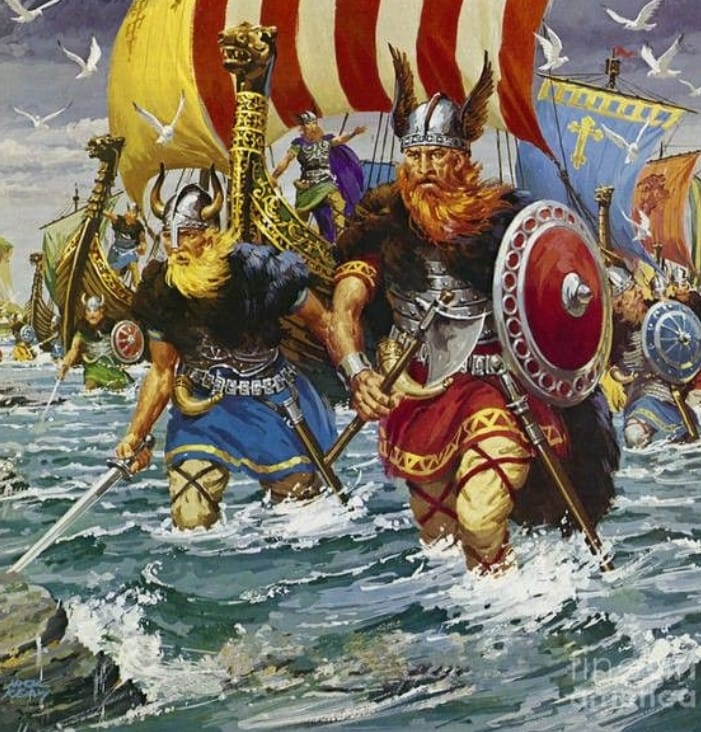
For centuries, the Vikings have been painted as brutal raiders with horned helmets, unstoppable ships, and an appetite for conquest. But behind that stereotype lies a civilization far more complex — master navigators, skilled traders, pioneering settlers, and the first known Europeans to set foot in North America nearly 500 years before Columbus. Their story begins long before their raids reached the shores of Europe, rooted in a unique Nordic environment that forced innovation, courage, and exploration.
Understanding the Vikings is not just about knowing their battles — it is about tracing how geography shaped their society, how Norse beliefs influenced their actions, and how their seafaring technology allowed them to cross the Atlantic when no one else dared. This article unravels the origins, culture, and surprising achievements of the Viking people, including their early contact with the Americas.
The Vikings Before Colombus
Long before Christopher Columbus crossed the Atlantic in 1492, Norse explorers had already reached North America. Archaeological evidence, sagas, and carbon-dated settlements show that Vikings—particularly Icelandic and Greenlandic explorers—sailed to the continent around 1000 CE, nearly 500 years earlier. Their voyages were documented in the Saga of the Greenlanders and the Saga of Erik the Red, which described daring expeditions beyond the known world.
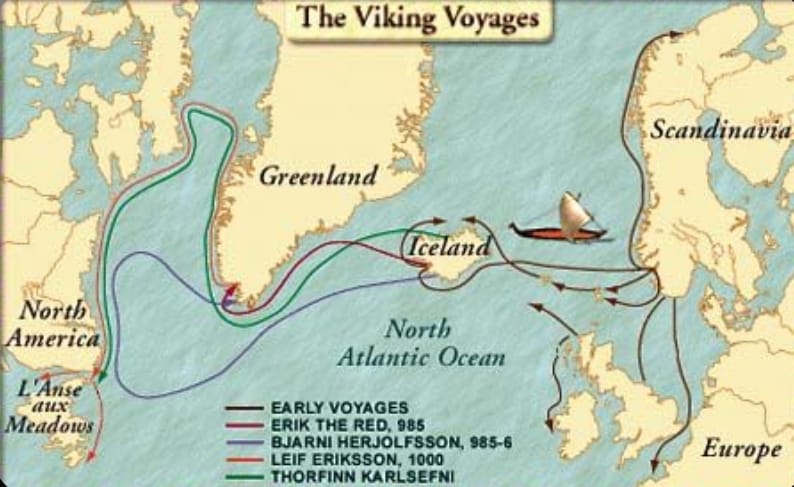
This early journey was possible because the Vikings mastered advanced seafaring technologies. Their famed longships—particularly the knarr, a sturdy cargo ship designed for open ocean voyages—enabled them to cross the treacherous North Atlantic through a chain of stepping-stone islands:
Norway → Iceland → Greenland → Vinland.
Vinland was a coastal area of North America explored by Vikings around 1000 AD, most famously by Leif Erikson. It is known for its wild grapes and likely included areas of present-day eastern Canada, such as Newfoundland, where a Norse settlement was discovered at L’Anse aux Meadows.
The Journey to Vinland
The most well-documented Viking expedition to America was led by Leif Erikson, son of Erik the Red. Around 999–1001 CE, Leif sailed from Greenland and discovered a new land he named Vinland, meaning “Wine Land” or “Pasture Land.” Many scholars identify Vinland with modern-day L’Anse aux Meadows in Newfoundland, Canada, a confirmed Viking settlement discovered in 1960.
The settlement featured longhouses, workshops, smithies, and boat repair areas. It was not merely a landing site—it was a functioning base where Vikings harvested timber, hunted game, and explored deeper inland. Some theories suggest the Vikings may have traveled as far south as New Brunswick or even Maine.
Life in North America: Norse Meets Indigenous Peoples
Archaeological finds—including butternut shells and iron smithing tools—suggest sustained exploration and trade. These interactions brought the Vikings into contact with Native American groups they called Skrælings. Initial exchanges were peaceful, but conflicts eventually arose due to cultural misunderstandings and competition for resources.
Norse settlements were small, seasonal, and fragile. The combination of hostile encounters, harsh climate changes, and long supply lines forced them to withdraw after a few decades. However, their presence left an imprint on Indigenous oral histories and certain Norse artifacts found across North American regions.

Viking Culture and Traditions Behind the Voyages
The Viking world was driven by exploration, honor, and survival. Their voyages were fueled by cultural values of courage (drengskapr) and destiny (wyrd), along with practical needs for farmland, resources, and prestige. Navigators used sunstones, stars, and seabird patterns to determine direction. Their shipbuilding—particularly the clinker-built wooden hulls—made their vessels swift, flexible, and ideal for both rivers and oceans.
Viking society also had strong legal and economic systems. Chieftains like the Erikson family possessed authority through thing assemblies, and voyages were often financed collectively. Their beliefs in Norse gods—especially Odin, god of wisdom—legitimized exploration as almost spiritual quests.
The Legacy: Rewriting the History of Discovery
The rediscovery of L’Anse aux Meadows changed world history in 1960, proving scientifically that Vikings were the first known Europeans to set foot in North America. Norse artifacts found there include iron nails, spindle whorls, bronze pins, and turf-based architecture identical to those in Iceland and Greenland. The settlement is now a UNESCO World Heritage Site, symbolizing the earliest transatlantic contact.
The Viking discovery reshaped our understanding of global exploration, challenging the Columbus-centric narrative. Today, Leif Erikson is honored in the United States with Leif Erikson Day (October 9), and the longship Íslendingur successfully recreated his voyage from Iceland to America in 2000 to commemorate the millennium of the original journey.
The Vikings were explorers, thinkers, shipbuilders, and traders whose impact is still visible today. Their society was advanced, their technology revolutionary, and their courage unmatched in their time. They crossed the Atlantic centuries before Columbus, proving that history is often far richer than the simplified stories we learn in school.
As we continue uncovering archaeological discoveries and decoding Norse sagas, one truth becomes clearer: the Vikings were not merely a chapter in Europe’s dark past — they were architects of global exploration.
If you’re fascinated by their world, don’t stop here. Study their mythology, their runes, their ship designs, and their sagas. The more you learn, the more you realize that the story of the Vikings is far from finished.
*****

Dapatkan informasi mengenai kesehatan mental, edukasi seksual, dan tips pelajar hanya di Majalah Sunday, teman curhat remaja Indonesia.
Ikutan berkarya di
Konten Lainnya
Terbaru
Terbaru
Dengerin Podcast
Penasaran? Yuk, tonton sekarang di YouTube!
Terpopuler
Terpopuler
Post Views: 152