
The Megaliths of Baalbek
Penulis: Jeyano Zaidan Enggelete – Universitas Kristen Indonesia
Located in the Beqaa Valley of modern-day Lebanon, the ancient city of Baalbek is home to some of the most impressive examples of Roman architecture. Known in ancient times as Heliopolis, Baalbek became an important religious center during the Roman Empire. Today, it is particularly famous for its enormous stone structures, especially those found in the foundations of the Temple of Jupiter.
Among its most remarkable features are the its megaliths, enormous limestone blocks that were used in the construction of the temple’s supporting platform. Some of these stones are estimated to weigh more than 800 tons, making them extraordinary examples of ancient construction. Their enormous size raises an interesting question: how did ancient builders manage to quarry, transport, and position stones weighing hundreds or even thousands of tons without modern machinery?
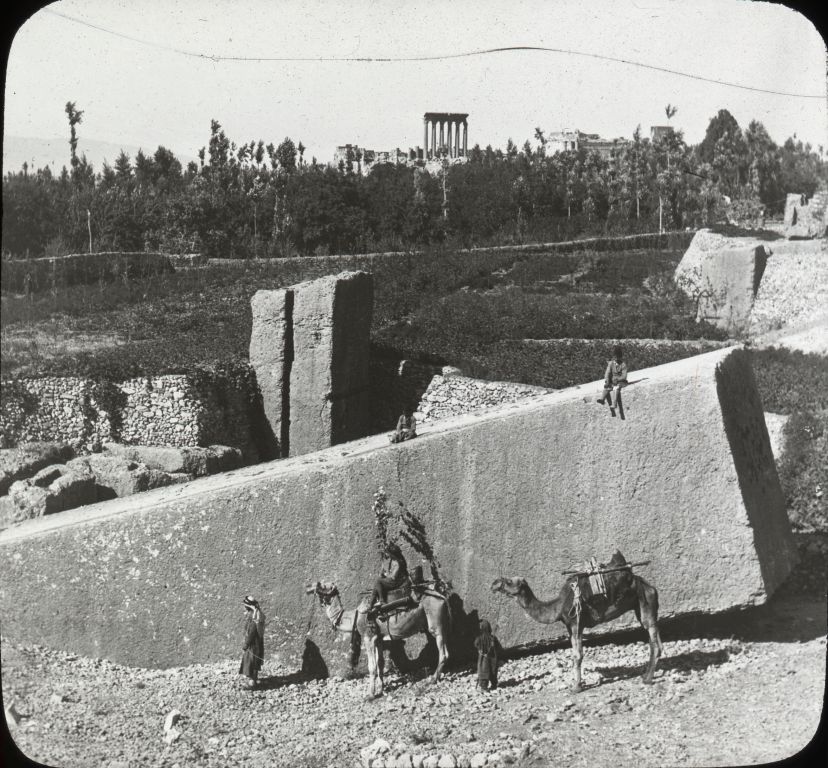
The Megaliths of Baalbek
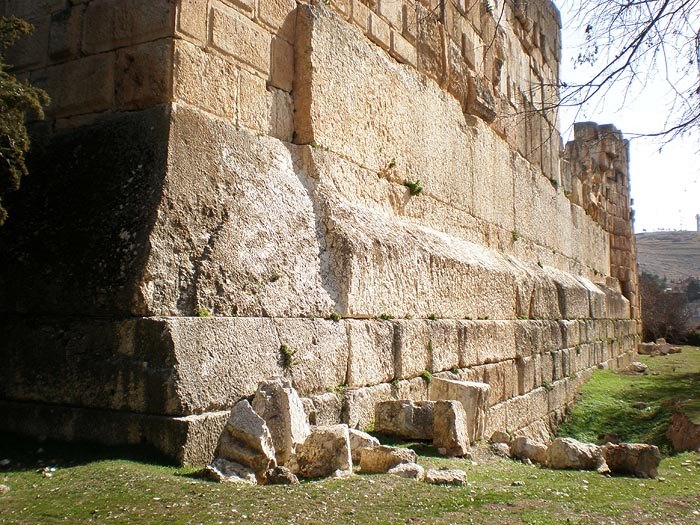
The most famous megaliths of Baalbek can be found in the foundations of the Temple of Jupiter. These enormous limestone blocks form part of the temple’s supporting platform and demonstrate the scale of Roman construction projects. Their dimensions are particularly impressive because they were carefully shaped and positioned as part of a much larger architectural structure.
Among these stones are three enormous blocks collectively known as the Trilithon. Each block is estimated to weigh more than 800 tons, making them some of the largest stones ever incorporated into an ancient building. Their placement within the temple’s foundations demonstrates the remarkable scale of the construction project and raises questions about the engineering methods used by Roman builders.
Ancient Engineering and Construction Techniques
Building the Baalbek megaliths required considerable planning, skilled workers, and engineering knowledge. Ancient workers used tools such as iron chisels and hammers to cut enormous limestone blocks from a nearby quarry, located approximately 800 meters from the Temple of Jupiter.
Transporting these massive stones presented an even greater challenge. Builders may have used wooden sledges, rollers, ropes, and ramps, along with large teams of workers, to move the blocks toward the construction site. However, archaeologists have not confirmed the exact transportation methods. Once the stones reached the temple, workers needed to position them carefully within its foundations. They may have relied on levers, wooden supports, and earthen ramps to lift and maneuver the blocks into place.
These construction methods required more than physical strength. The project also demanded skilled architects, organized labor, careful planning, and effective resource management.
Theories and Mysteries Surrounding the Megaliths
Despite archaeological research, several questions remain about the Baalbek megaliths. One of the most frequently discussed questions is why the builders chose to use such enormous stones instead of smaller blocks that would have been easier to transport and position. The use of these massive materials suggests that the builders had specific architectural or structural reasons for doing so.
One conventional archaeological explanation is that the enormous stones were used to create a strong and stable foundation for the Temple of Jupiter. Their placement within the supporting platform may have been intended to provide the necessary structural support for the monumental temple above it. Their use also reflected the Roman preference for impressive architecture that demonstrated the power, wealth, and influence of the empire.
Another question concerns the transportation of the stones. Although techniques such as sledges, ramps, ropes, and levers provide possible explanations, researchers have not established exactly how the largest blocks were moved. The discovery of unfinished stones in the quarry is particularly important because it suggests that some blocks may have been abandoned before transportation.
Archaeological Significance and Modern Research
The archaeological discoveries at Baalbek have contributed significantly to the understanding of Roman engineering and construction. The massive stones provide physical evidence of the scale of ancient building projects and demonstrate the ability of Roman engineers to work with exceptionally large construction materials.
Excavations in the nearby quarry have been particularly important. The discovery of unfinished megaliths allows researchers to examine the extraction process and investigate why certain stones were never transported to the construction site. The 2014 discovery of the approximately 1,650-ton stone, for example, provided new opportunities to study ancient quarrying practices and the challenges associated with transporting such enormous materials
Modern archaeological research also benefits from technological developments. Techniques such as digital surveying, photogrammetry, and three-dimensional scanning can help researchers document the dimensions, surfaces, and positioning of ancient structures. These methods allow archaeologists to create detailed digital representations of archaeological remains and compare different parts of the site without relying entirely on traditional measurements.
However, studying Baalbek still presents several challenges. Some of the largest stones remain partially buried in the quarry, making it difficult to determine their complete dimensions and the precise methods used to extract them. Furthermore, the passage of time, environmental conditions, and human activity have affected the preservation of the archaeological site.
Baalbek's Cultural and Historical Legacy
Beyond its architectural significance, Baalbek holds considerable cultural and historical importance for Lebanon and the wider world. Its ancient temple complex reflects the religious, political, and architectural developments that took place in the region throughout history. Originally associated with Phoenician religious traditions, the city later became an important sanctuary during the Roman period, attracting pilgrims who worshipped the deities Jupiter, Venus, and Mercury.
In 1984, Baalbek was officially recognized as a UNESCO World Heritage Site because of its outstanding historical and architectural value. Its monumental structures demonstrate the influence of Roman architecture while also reflecting the integration of local traditions and religious beliefs. The Temple of Jupiter, the Temple of Bacchus, and other surviving structures provide important evidence of the architectural achievements of the Roman Empire.

Preserving Baalbek is important for Lebanon and also for the international archaeological community. The site provides researchers with opportunities to study ancient construction techniques, religious practices, and architectural developments. Its preservation ensures that future generations can continue learning from these historical structures.
Baalbek represents a significant part of human history and cultural heritage. Its structures remind us that ancient civilizations possessed considerable knowledge, creativity, and engineering skills, even without the machinery and technology available today. Understanding these achievements allows us to appreciate the development of human engineering and the importance of archaeological research.
Produk Rekomendasi Sunday





*****

Dapatkan informasi mengenai kesehatan mental, edukasi seksual, dan tips pelajar hanya di Majalah Sunday, teman curhat remaja Indonesia.
Ikutan berkarya di
Konten Lainnya
Terbaru
Terbaru
Dengerin Podcast
Penasaran? Yuk, tonton sekarang di YouTube!
Terpopuler
Terpopuler
Views: 2