
Lemuria: The Other Atlantis
Penulis: Jeyano Zaidan Enggelete – Universitas Kristen Indonesia
Lemuria is a lost continent that was once believed to have existed in the Indian Ocean, connecting regions such as Madagascar, India, and parts of Southeast Asia. It began as a 19th-century scientific hypothesis proposed to explain an unusual pattern in the distribution of animals, particularly on the distribution of lemur fossils. Over time, the concept developed beyond its scientific origins and became associated with occult beliefs, ancient civilizations, and stories similar to those of Atlantis.
The Scientific Origins of Lemuria
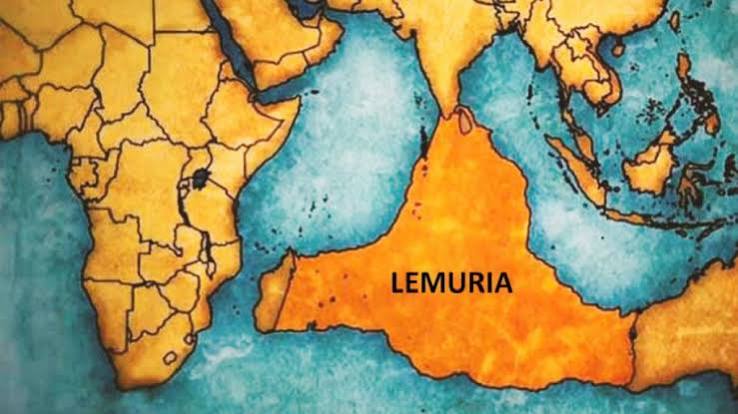
The concept of Lemuria was proposed in 1864 by British zoologist Philip Sclater. While studying the distribution of lemurs, Sclater noticed that Madagascar had a particularly large number of these animals compared with other regions. At the time, scientists did not yet have the modern theory of plate tectonics to explain how species could become separated across distant landmasses. Sclater therefore suggested that a large, now-submerged continent may once have connected Madagascar with other areas around the Indian Ocean. He called this hypothetical landmass Lemuria, based on the lemurs that inspired the idea.
It is important to understand that Sclater’s Lemuria was not originally imagined as a mysterious civilization. It was an attempt to solve a biogeographical problem using the scientific knowledge available during the 19th century. Scientists were trying to understand why similar animals appeared in geographically separated regions, and a former land connection was one possible explanation before scientists had a complete understanding of continental movement.
Lemuria and the Development of Plate Tectonics
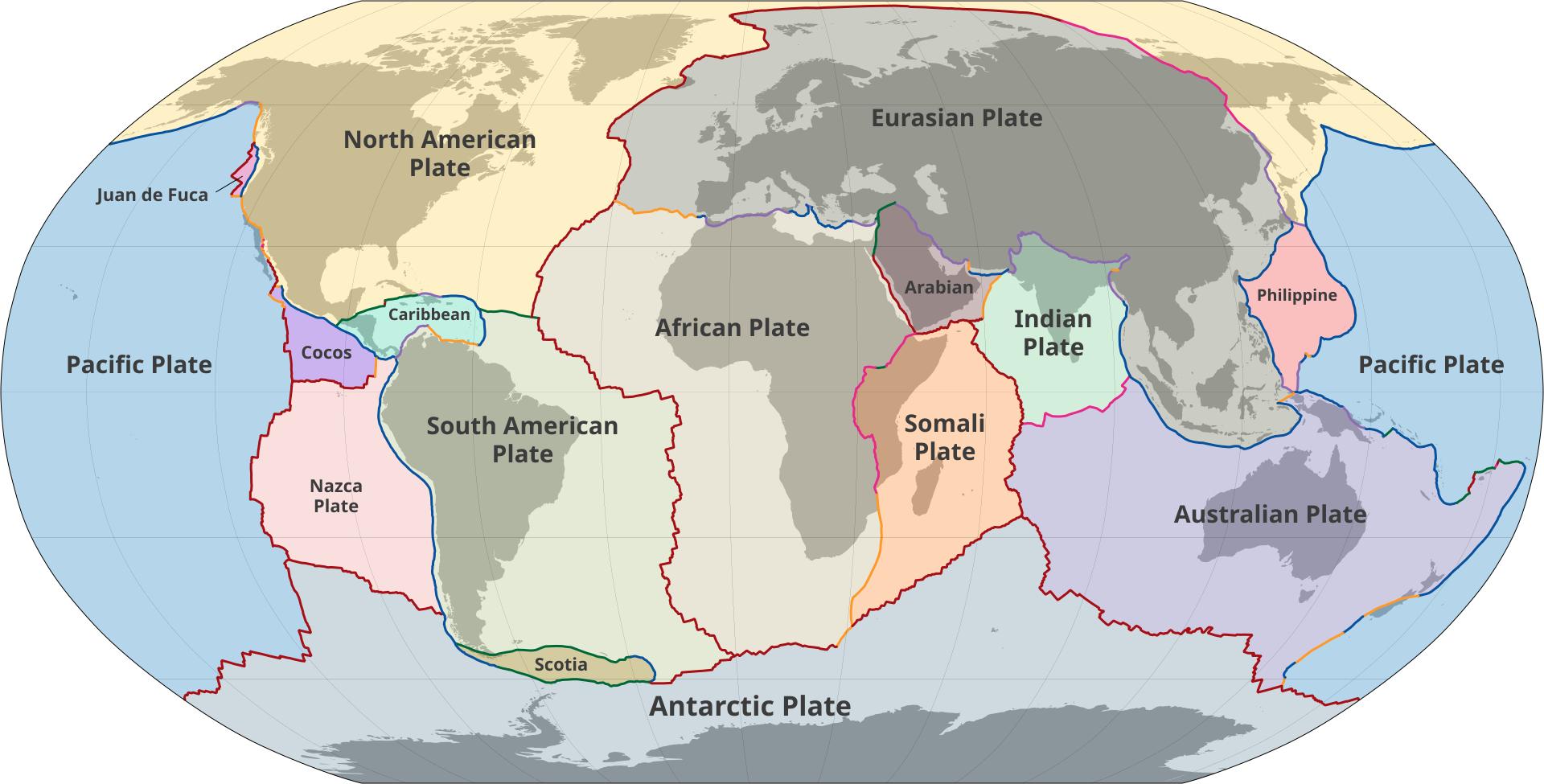
The development of continental drift and later plate tectonics significantly changed scientific understanding of Earth’s continents and biosphere. Alfred Wegener formally developed the theory of continental drift in the early 20th century, proposing that continents had once been joined and subsequently moved apart. Later discoveries, including evidence from the ocean floor, magnetic reversals, seafloor spreading, earthquakes, and volcanic activity, contributed to the development of modern plate tectonics.
Plate tectonics provided scientists with a more comprehensive explanation for the changing positions of Earth’s continents. Instead of requiring a large continent such as Lemuria to explain the distribution of life, scientists could investigate how continents and other landmasses had moved over geological time. Modern plate tectonics describes Earth’s outer layer as being divided into moving plates, whose movements have shaped continents, oceans, mountains, and other geological features.
Because of these developments, Lemuria is no longer accepted as a scientifically valid lost continent. This does not mean that scientists stopped studying the geological history of the Indian Ocean or ancient landmasses; rather, modern geology explains these questions through geological processes supported by evidence from plate tectonics.
Lemuria in Mythology and Occult Beliefs
The idea of Lemuria changed dramatically after its original scientific proposal. In the late 19th century, Helena Blavatsky and other Theosophical writers transformed Lemuria from a hypothetical landmass into part of an elaborate mystical history of humanity, claiming that it was inhabited by an ancient “Lemurian” race. These claims were not supported by geological or archaeological evidence and were fundamentally different from the original scientific purpose of the Lemuria hypothesis.
Theosophical teachings placed Lemurians within a hierarchy of successive “root races,” followed by the Atlanteans and eventually the so-called “Aryan” root race. This system incorporated ideas about humanity developing through supposedly distinct racial stages, reflecting the racial thinking that was widespread in parts of 19th-century Europe.
These ideas became particularly problematic because concepts of supposedly different stages of human development has been used to place certain populations above others. Later European occult and nationalist movements selectively incorporated Theosophical racial concepts into their own ideologies, demonstrating how speculative ideas about ancient civilizations and human “races” could be adapted to support racialist and supremacist thinking.
Myth and Science
The contrast between the scientific Lemuria hypothesis and its later occult interpretations is therefore significant. Sclater’s original idea was an attempt to explain animal distribution using the scientific knowledge available in the 19th century, it was not a theory about an advanced human civilization. Modern geology eventually provided a more comprehensive explanation through continental drift and plate tectonics.
The later stories about Lemurian civilizations, supernatural abilities, and supposed stages of human evolution are pseudohistorical claims with no credible evidence to support them. Treating these inventions as genuine ancient history misrepresents mythology as fact and gives unfounded ideas the false appearance of legitimate scholarship.
The racial dimension makes these interpretations particularly important to examine critically. Ideas about supposedly superior and inferior stages of humanity have historically been used to rationalize racial hierarchies, while Theosophical racial theories became part of a broader environment in which occultism, nationalism, and racial ideology sometimes overlapped. This however, does not mean that everyone interested in Lemuria supports supremacist ideas, but it does mean that the origins and historical uses of these beliefs deserve genuine scrutiny.
Readers should therefore be cautious when encountering modern claims that present Lemuria as a historically established civilization or use Lemurian stories to explain the origins or supposed superiority of particular groups. Extraordinary claims require extraordinary evidence, and repeating pseudohistorical claims without examining their origins can give them an appearance of legitimacy that they have not, and should not earned.
Lemuria began as a 19th-century scientific hypothesis intended to explain patterns in animal distribution, but it was later transformed into an occult narrative about lost civilizations and supposedly successive human “races.” The later interpretation is unsupported by modern geology and archaeology, while its racial-evolutionary elements have a troubling history of being connected to broader racist and supremacist ideas.
Readers should not accept stories about Lemuria or other lost civilizations simply because they are presented as ancient lost knowledge. Instead, they should investigate the origins of these claims, examine the available evidence, and remain especially critical when supposed ancient history is used to justify ideas about racial superiority or inferiority.
Produk Rekomendasi Sunday





*****

Dapatkan informasi mengenai kesehatan mental, edukasi seksual, dan tips pelajar hanya di Majalah Sunday, teman curhat remaja Indonesia.
Ikutan berkarya di
Konten Lainnya
Terbaru
Terbaru
Dengerin Podcast
Penasaran? Yuk, tonton sekarang di YouTube!
Terpopuler
Terpopuler
Views: 61