
Beast of Gevaudan: Maneater
Penulis: Jeyano Zaidan Enggelete – Universitas Kristen Indonesia
In the year 1764 in Gevaudan, France a woman who was walking with her herd of bulls to graze was attacked by, what she describes as, an unusually large canine. Sometime after a few corpses were found, they were all of women, and young children. These corpses were attributed to the wolf packs in and around the area. It was not unusual as the people of Gevaudan and the whole of rural France, are already familiar with wolves and how they behaved. A few casualties were normal, tragic, but normal. But the attacks kept increasing, and more and more were found dead.
Survivors however, did exist. And a majority of them describe almost the same creature as the first woman that was attacked. News of the attacks and the dead spread like wildfire across France. Now it was not blamed on wolves, but rather the Beast of Gevaudan. Though the beast did exist, from the first day of its attack to modern day a question still lingers. What was the Beast of Gevaudan?
The First Attacks
In the summer of 1764, the first recorded casualty attributed to the Beast was that of 14-year-old Jeanne Boulet who was attending to her flock when she was attacked. Other reports suggested that other encounters with the Beast had occurred earlier but, her death was the first widely recorded attack by the Beast. As the number of victims grew panic, fear, and paranoia spread throughout the region of Gevaudan. Eventually this story was picked up by the French press and the Beast become a national sensation.
Though fatalities occurred there were people who either survived the Beast or witnessed it. Witnesses describes it as a wolf but not a wolf, large in size, a thick fur that can withstand spears and bullets, a stripe running along its back, and a large head among others. These unusual descriptions, alongside the rising number of victims, and sensationalized newspapers, helped the Beast to garner near mythical status across eighteenth-century France.
The Beast's Appearance and Behaviour
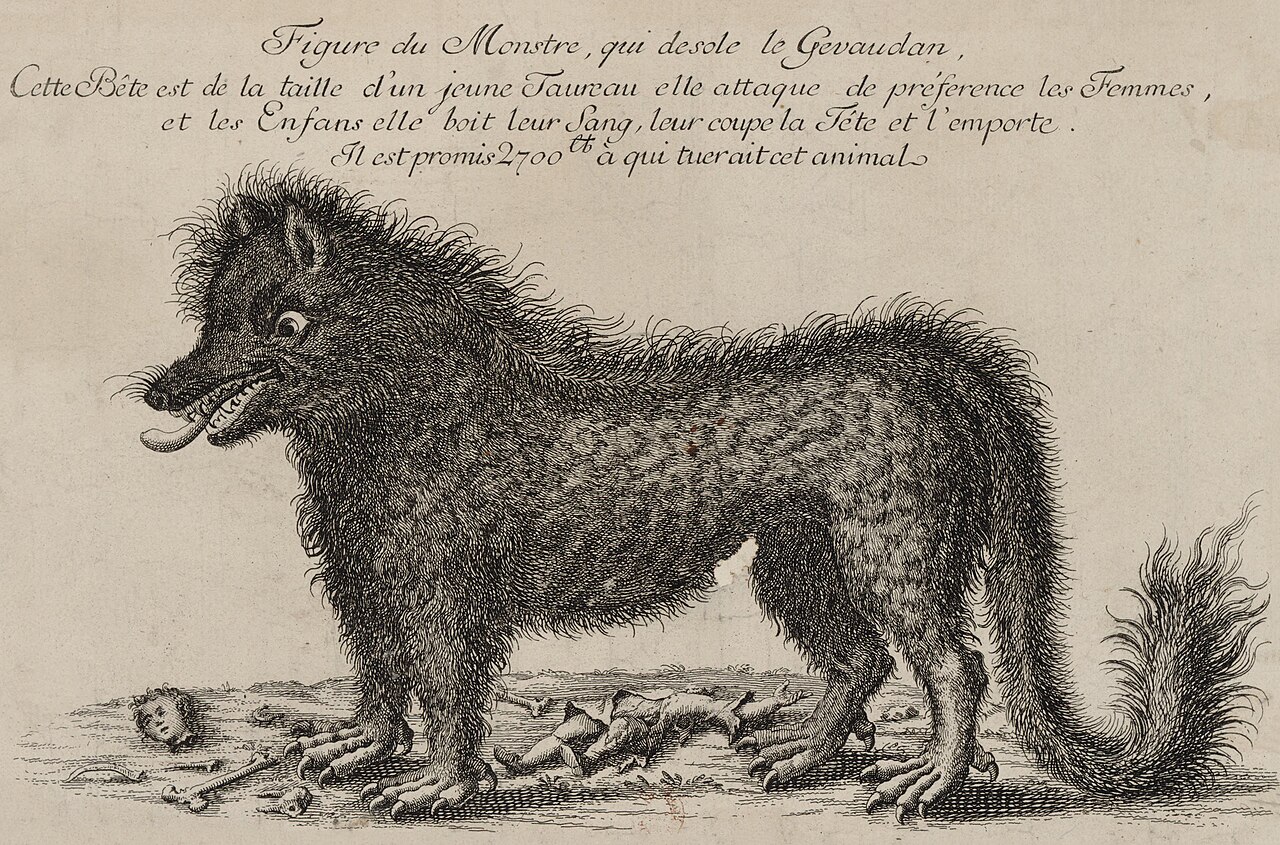
The Beast of Gevaudan was described by eyewitnesses as an unusual and terrifying creature that looked similar to a wolf but differed in several physical characteristics. Historical accounts described it as being as large as a calf or even a horse, with reddish-gray fur, a dark stripe along its back, a large head, and a long, powerful tail. Some witnesses also reported that it had strong claws and unusual proportions compared with ordinary wolves. However, these descriptions varied, making it difficult to establish the creature’s actual appearance.
The Beast was reportedly responsible for repeated attacks on people, particularly women and children who were tending livestock in the countryside. According to historical reports, the creature often approached its victims suddenly, attacking their heads or throats before escaping. Some accounts suggested that it behaved differently from typical wild predators because it appeared willing to approach humans even when people were nearby. These incidents created widespread fear among the local population, and some people believed that more than one creature was responsible for the attacks.
Several theories have attempted to explain the Beast’s appearance and behaviour. Wolves were common in eighteenth-century France and were known to attack humans, making them one of the most plausible explanations. However, some descriptions did not match the typical appearance of a European wolf, leading to alternative theories involving large dogs, wolf-dog hybrids, striped hyenas, or even lions. A striped hyena, for example, might explain some of the reported markings, although this theory remains speculative.
Ultimately, the inconsistent eyewitness accounts made it difficult to identify the Beast with certainty. Some descriptions may have been influenced by fear, rumours, and sensational newspaper reports, which helped transform the animal into something seemingly more monstrous than an ordinary predator.
The Crown’s Response
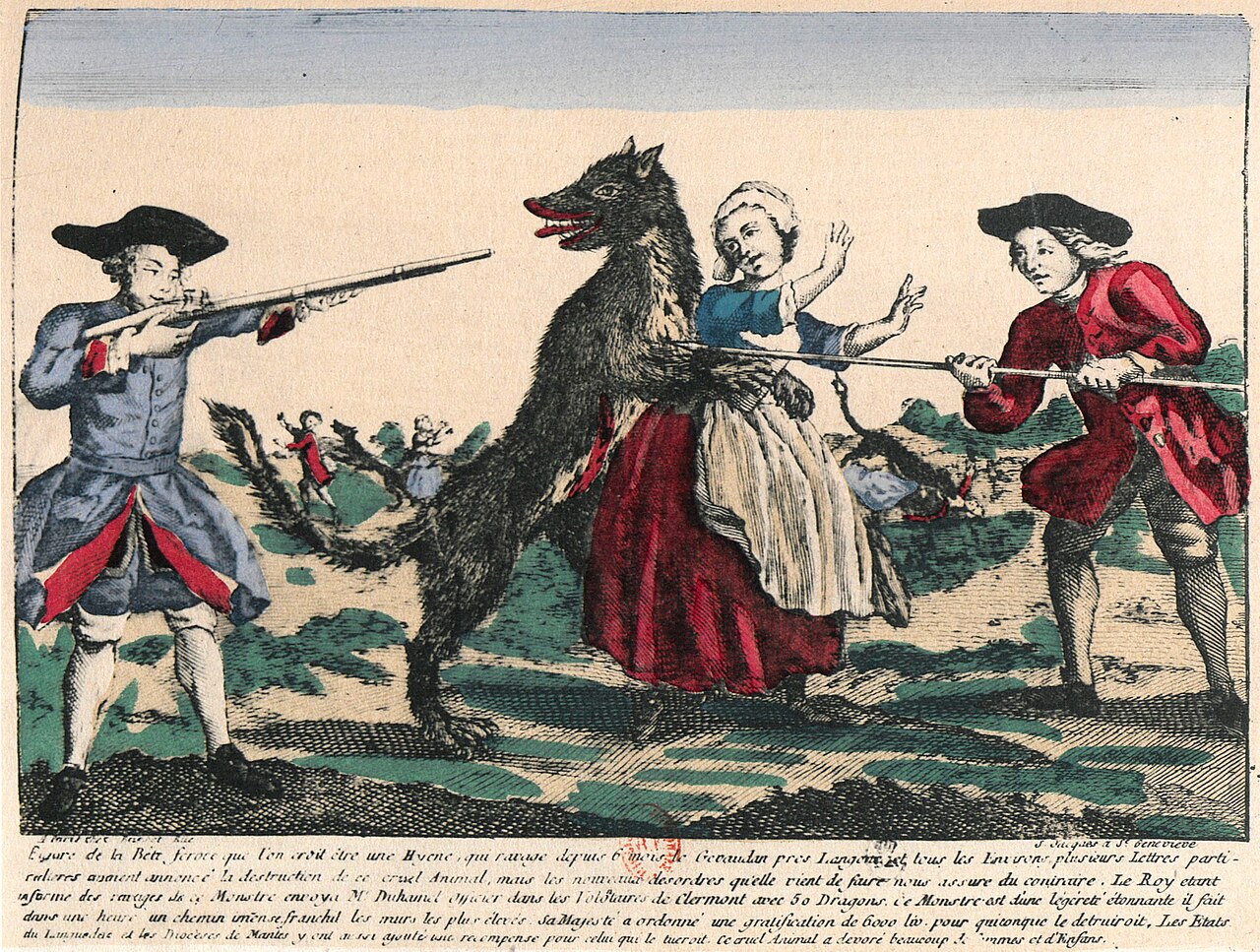
As reports of the attacks spread throughout Gevaudan, the situation eventually attracted the attention of King Louis XV and the French royal court. The increasing number of victims and the growing public panic made the Beast more than a local problem; it became an issue that demanded royal intervention. The attacks also attracted attention through newspaper reports, which helped spread the story beyond the region and increased pressure on the authorities to find a solution.
The French authorities responded by organizing hunting expeditions involving local hunters, soldiers, and professional wolf hunters. Their objective was to track down and kill the creature before it could claim more victims. However, the landscape of Gevaudan, combined with the animal’s reported speed and ability to escape its pursuers, made the hunts difficult. Despite numerous attempts, the Beast continued to evade capture, and the people of the region remained frightened.
In 1765, François Antoine, the king’s royal gunbearer and an experienced hunter, was sent to Gevaudan to eliminate the creature. Antoine organized a large hunting expedition and eventually killed a large wolf near the region. The animal was presented as the Beast, and its death was celebrated as a victory for the Crown. For a time, people believed that the attacks had finally come to an end. However, reports of further attacks emerged after Antoine’s departure, the renewed attacks damaged public confidence and ensured that the mystery continued.
Jean Chastel and the Reported Death of the Beast
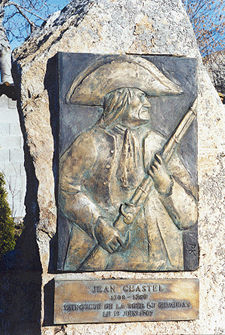
The story of the Beast of Gevaudan is traditionally brought to an end in June 1767, when a local hunter named Jean Chastel reportedly killed the creature. Unlike François Antoine, whose success had been followed by further attacks, Chastel became associated with the final resolution of the crisis. According to popular accounts, he was hunting in the woods of Gevaudan when he encountered the animal and shot it. The Beast’s death is commonly dated to June 19, 1767, although details of the encounter differ between later retellings.
Chastel’s achievement became part of local legend. Some versions of the story claim that he used specially blessed bullets, connecting the hunt to the religious beliefs and superstitions of the period. These details have helped create the popular image of Chastel as a hunter who defeated a creature that ordinary weapons and hunting expeditions had failed to stop. However, such dramatic elements should be treated cautiously because the details have been embellished in some retellings.
The most important question is whether the animal Chastel killed was truly responsible for the attacks. The reports surrounding its death are not sufficient to establish its identity with certainty, and the surviving evidence does not conclusively prove that it was a unique or unknown species. Nevertheless, the attacks reportedly stopped after this event, strengthening the belief that Chastel had killed the Beast. Whether he killed an unusually aggressive wolf, another kind of animal, or a creature that had become exaggerated through years of fear remains uncertain.
Theories About the Identity of the Beast
Despite the efforts of royal hunters and the reported killing of the creature, the true identity of the Beast of Gevaudan remains a subject of debate. Several theories attempt to explain the attacks, ranging from ordinary predators to more unusual possibilities shaped by the beliefs of eighteenth-century France.
A Man-Eating Wolf
One of the most widely accepted explanations is that the Beast was a wolf, or possibly a group of wolves, that repeatedly attacked humans. Wolves were common in rural France during the eighteenth century, and attacks on people were not entirely unknown. An additional factor worth considering is the historical context: the attacks began shortly after the Seven Years’ War (1756–1763), a conflict that caused widespread casualties across Europe and beyond. In areas affected by warfare, predators could potentially have encountered human remains and scavenged them, although there is no direct evidence that this happened in Gevaudan or influenced the Beast’s behaviour. If the animal had previously scavenged human remains, that exposure might be considered as a possible factor in its familiarity with human bodies.
A Wolf-Dog Hybrid
Another theory suggests that the Beast was a wolf-dog hybrid. An animal with characteristics inherited from both wolves and large domestic dogs might have appeared unusually large or physically different from the predators familiar to local villagers. Its behaviour could also have differed from that of a typical wild wolf, potentially explaining why some witnesses considered it exceptionally aggressive. Nevertheless, no conclusive physical evidence has established that the Beast was a hybrid, so this explanation remains speculative.
An Exotic or Escaped Animal
Some theories propose that the Beast was an exotic animal that had escaped from captivity, possibly from a nobleman’s menagerie. During this period, wealthy Europeans sometimes maintained collections of unusual animals, and an escaped predator could have been unfamiliar to the local population. A striped hyena, for example, has been suggested because its markings could resemble certain historical descriptions of the Beast. Other theories have proposed a lion or another large predator. However, there is no definitive evidence that an exotic animal escaped into Gevaudan and caused the attacks.
Human Involvement
A more disturbing theory suggests that a human may have been involved in the attacks. Some speculation proposes that a person could have trained an animal to attack people deliberately, or that an individual, mainly thought to be the beast’s killer Jean Chastel himself, may have exploited the public’s fear for personal reasons. The repeated nature of the attacks and reports of unusual animal behaviour have encouraged such interpretations. However, there is no conclusive historical evidence proving that someone deliberately directed the Beast’s attacks.
A Werewolf
The theory that the Beast was a werewolf reflects the religious beliefs, folklore, and supernatural fears of eighteenth-century France. Werewolves had long appeared in European legends. During the Gevaudan attacks, the creature’s unusual appearance, repeated killings, and apparent ability to evade hunters encouraged some people to interpret the events as something supranatural.
In a society where folklore and religious beliefs strongly influenced how people understood unexplained events, the idea of a werewolf could seem like a possible explanation to frightened villagers. The growing panic surrounding the attacks may also have helped supernatural interpretations spread.
The Beast of Gevaudan remains a fascinating mystery in French history. Although the attacks between 1764 and 1767 were real historical events, the exact identity of the animal responsible remains uncertain. Theories ranging from man-eating wolves and wolf-dog hybrids to escaped exotic animals and werewolves demonstrate how fear can shape people’s understanding of unexplained events.
Exploring folk monsters, such as the Beast of Gevaudan, allows us to understand the beliefs, and fears that have shaped other societies throughout history. By learning about these legends and their origins, we can develop greater appreciation towards our own and others cultures’ as well.
Produk Rekomendasi Sunday





*****

Dapatkan informasi mengenai kesehatan mental, edukasi seksual, dan tips pelajar hanya di Majalah Sunday, teman curhat remaja Indonesia.
Ikutan berkarya di
Konten Lainnya
Terbaru
Terbaru
Dengerin Podcast
Penasaran? Yuk, tonton sekarang di YouTube!
Terpopuler
Terpopuler
Views: 2