
A Short Story - Romeo and Juliet in the Age of Bad News
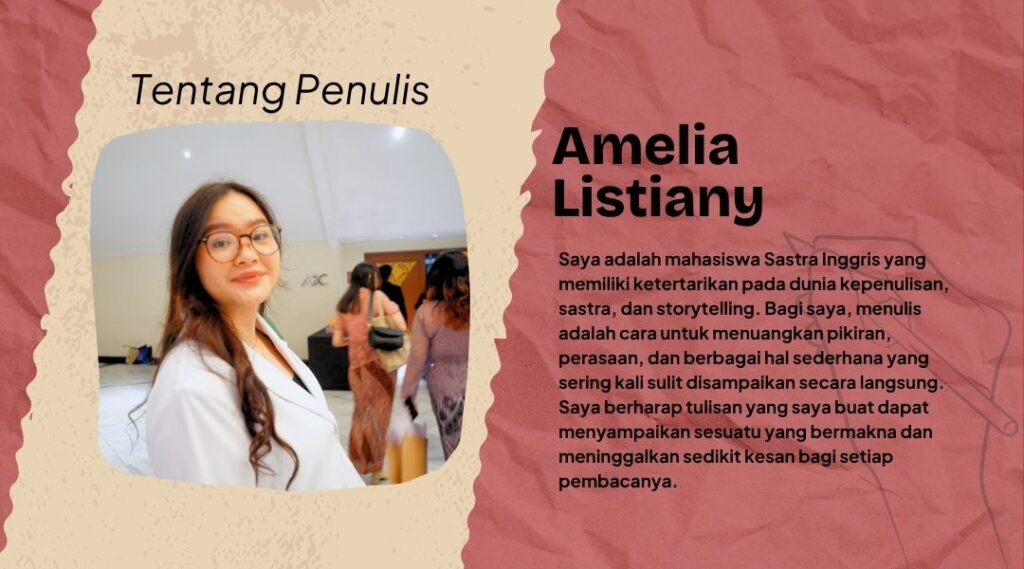
Penulis: Amelia Listiany – Universitas Kristen Indonesia
Some love stories are destroyed by family feuds. Others are destroyed by elections, by blind loyalty to politicians, and by people too stubborn to see beyond their own beliefs or too insensitive to realize that, sometimes, being right matters less than the people they hurt along the way.
I. The Photograph
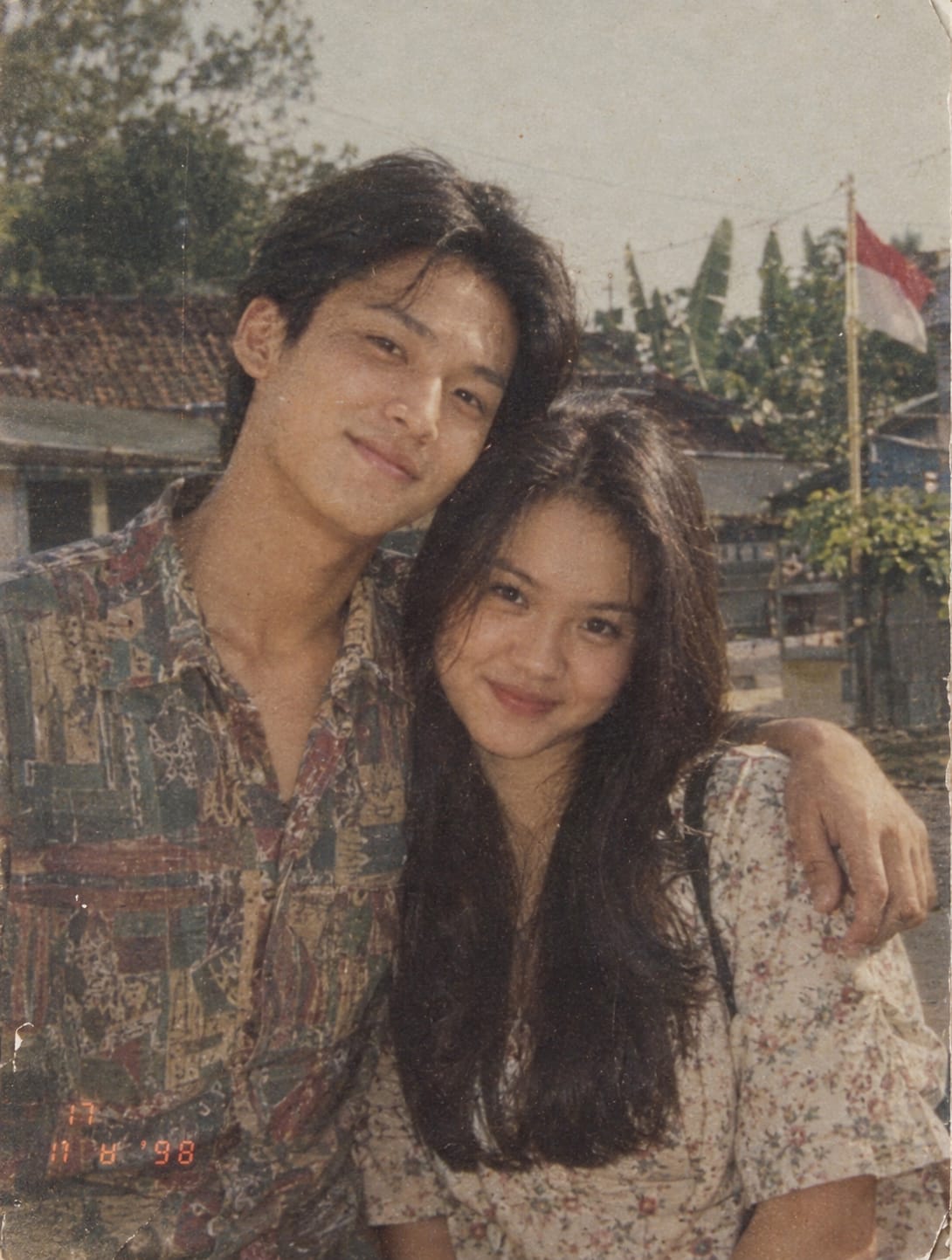
Nara was twenty-one when she discovered that her mother had once been in love with a man who wasn’t her father.
Technically, she discovered this while packing a box of expired medicine, three broken watches, and a collection of plastic bags her mother had been saving for reasons known only to the Indonesian middle class.
They were moving out of their old house, and Maya had instructed her to sort through everything in the storage room.
“Keep the important things,” her mother said.
“Define important.”
“Things we might need.”
“Mom, this house has a rice cooker older than the Reformasi era.”
“Then keep it. It still works.”
Nara sighed and returned to the boxes.
It was beneath a stack of yellowing newspapers that she found a small photograph. The edges had curled with age, and the image had faded into shades of brown. It showed her mother, much younger, standing beside a handsome young man in a white shirt. They were smiling at each other with the kind of shameless happiness that made Nara feel personally offended.
Her mother had never smiled at her father like that in any photograph Nara had seen.
“Mom?”
“Hm?”
“Who’s this?”
Maya looked at the photograph. For a moment, the room went quiet.
“His name was Adrian,” she said.
“Was?”
“He was my first love.”
Nara sat up straight.
“Oh, my God. Mom, you had lore?”
“Everyone has a past, Nara.”
“Yeah, but yours apparently has a male lead.”
Maya snatched the photograph from her hand, though the faint smile on her face betrayed her.
“Put it away.”
“Absolutely not. I’m twenty-one. I’m legally entitled to know the plot twists in my mother’s life.”
Maya shook her head. Outside, a truck rumbled past the house. Somewhere, a neighbor was loudly discussing the price of cooking oil with another neighbor, as if the fate of the republic depended on it.
“We broke up because of politics,” Maya finally said.
Nara blinked.
“Politics?”
“Yes.”
“Not cheating? Not long distance? Not because he wanted children and you wanted to travel?”
“No.”
“Your love story ended because of an election?”
Maya gave her a tired look.
“It was more complicated than that.”
Nara glanced at the photograph again.
“Okay,” she said. “Tell me everything.”
And so, between cardboard boxes and the remains of a life her mother had built, Maya began telling a story that belonged to another Indonesia.
An Indonesia that had once believed the future could be changed by taking to the streets.
An Indonesia that had learned, painfully, that changing a government was one thing. Changing people’s minds was another.
II. Jakarta, 1998
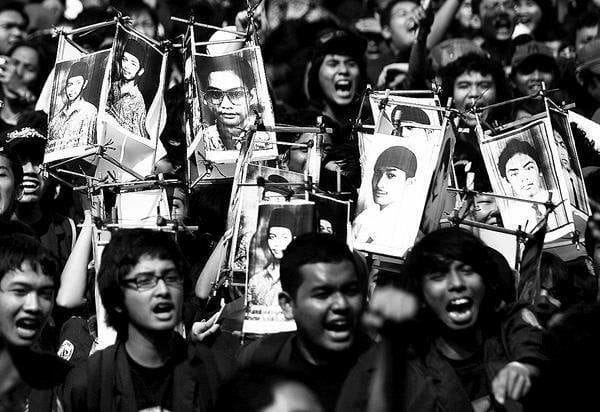
Maya was nineteen in 1998.
She was young enough to believe that love could fix almost anything and old enough to understand that the country she lived in was beginning to fall apart.
The prices of basic necessities were rising. The rupiah was collapsing. Students were protesting, demanding reform, and the streets of Jakarta were filled with uncertainty, anger, and the sound of people asking whether the country could continue like this.
Maya attended demonstrations with her university friends. She carried a bottle of water, a handwritten banner, and a fear she tried not to show.
She believed the country needed change.
Adrian believed it, too. That was the funny part.
They met at a student discussion on campus, where Adrian spent twenty minutes arguing that the opposition politician his family supported was the only person capable of leading Indonesia toward a better future.
Maya disagreed.
She thought his preferred candidate had too many compromises, too many convenient friendships, and too many promises that sounded suspiciously like the promises of the people already in power.
“So your candidate is perfect?” Adrian asked.
“No. But at least I’m willing to criticize him.”
Adrian laughed. “You criticize everyone.”
“That’s called having a functioning brain.”
“Or being impossible to please.”
“Those things aren’t mutually exclusive.”
He fell in love with her somewhere between that argument and the next.
Maya fell in love with him because he listened. Not always gracefully, and certainly not without arguing back, but he listened. He remembered her favorite snacks, waited for her after class, and walked beside her through streets where everyone seemed to be arguing about the future.
Their romance began with debates over instant noodles and ended most evenings with Adrian insisting that he had won the argument.
“You haven’t won anything,” Maya told him once.
“I’ve won your heart.”
“That’s not an argument.”
“It’s a result.”
“That’s not how democracy works.”
“Maybe you should teach a class.”
She threw a piece of tissue at him.
They were happy in the careless, ordinary way young people were happy before they understood how expensive the world could become.
But the country was changing, and the tension was beginning to seep into places where it did not belong.
Adrian’s father was a businessman with political connections. His family supported a powerful political camp and believed that stability was more important than protest. Adrian had inherited some of those beliefs, along with the confidence of a boy who had rarely needed to question where his family’s money came from.
Maya’s family, meanwhile, had grown increasingly critical of the political establishment. Her older brother joined student demonstrations, and her mother worried every time he left the house.
At first, the differences were manageable.
“My father says the protesters are making everything worse,” Adrian told her one afternoon.
“And your father says that because he doesn’t have to stand in the street with us.”
“Not everyone who disagrees with you is evil, Maya.”
“I never said they were.”
“You talk as if everyone who supports the government is stupid.”
“Then maybe stop defending everything the government does.”
He looked hurt. She felt guilty. They apologized, kissed, and promised not to discuss politics over dinner.
It lasted three days.
Then came May.
The demonstrations intensified. Students were killed. The Trisakti shootings shocked the country, and the violence and unrest that followed made it impossible to pretend that the crisis was merely a disagreement between political camps.
Maya remembered the fear most clearly: the frantic calls, the rumors, the streets she avoided, and the mothers who waited for their children to come home.
She remembered Adrian calling her late one night.
“Are you safe?” he asked.
“Yes.”
“Your brother?”
“He’s home.”
“Good.”
She waited for him to say something else. To acknowledge what had happened. To admit that the suffering was real, regardless of which politician someone supported.
Instead, Adrian said, “You know, this is why people shouldn’t provoke the authorities.”
Maya went silent.
“What?”
“I’m just saying. There are consequences.”
“Students were shot, Adrian.”
“I know.”
“And that’s what you have to say?”
“I’m not defending violence. I’m saying the situation is complicated.”
“Everything is complicated when you don’t want to admit who’s responsible.”
“That’s unfair.”
“Is it?”
He breathed into the receiver.
“My father says the media is exaggerating some of this.”
Maya closed her eyes.
“Your father wasn’t there.”
“And neither were you everywhere.”
It was a small sentence. An ordinary sentence. But something inside Maya shifted.
She realized that Adrian had begun treating suffering as a debate he needed to win.
By the time President Soeharto resigned on 21 May 1998, the country had entered a new chapter. But Maya and Adrian had already started losing each other.
Their final argument happened outside a campus building. Adrian had repeated something his father said about the protests, and Maya had asked whether he believed it.
“I don’t know what you want me to say,” he told her.
“The truth.”
“Maybe the truth isn’t as simple as you think.”
“Maybe. But refusing to look at it doesn’t make you thoughtful. It makes you comfortable.”
“And you think you’re better than me because you go to demonstrations?”
“No,” Maya said. “I think I’m you can be more sensitive and woke about the situation.”
Adrian stared at her.
For a moment, she wanted him to take her hand. She wanted him to say that he could disagree with her without dismissing the people who were suffering. She wanted him to understand that loving her did not mean surrendering his beliefs, only examining them honestly.
But Adrian had a family to defend, a future to protect, and a pride that would not let him admit he might be wrong.
“So this is it?” he asked.
Maya swallowed.
“I don’t know how to love someone who keeps asking me to ignore what I can see.”
Neither of them said goodbye properly.
They simply stopped calling.
Years later, Maya would wonder whether they had broken up because of politics or because politics had revealed something they had not wanted to see in each other.
She never found a comforting answer.
III. The New Romeo and Juliet
Twenty-eight years later, Indonesia had changed.
People could criticize the government online, record injustice on their phones, and broadcast their opinions to millions of strangers before finishing breakfast.
They could also spread misinformation before finishing breakfast.
In some ways, the country was more democratic. In other ways, it seemed that everyone had acquired a microphone and forgotten that listening was a separate skill.
Raka was Nara’s classmate.
He was funny, annoyingly well-read for someone who claimed not to enjoy reading, and capable of remembering the smallest details about her. He sent her songs he thought she would like, bought her iced coffee without asking, and once spent forty minutes helping her find a quotation for an assignment.
He also came from a family that supported the political camp Maya had spent much of her adult life criticizing.
Nara discovered this during their fourth date.
“You know my dad watches political commentary every night?” Raka asked.
“That’s not unusual. My mother watches the news and then complains about it for two hours.”
“No, I mean religiously. He has his favorite commentators, his favorite politicians, the whole thing.”
“Does he have a favorite presidential candidate, too, or is that too personal?”
Raka laughed. “My whole family supports the government.”
Nara stopped stirring her coffee.
“Like, supports it supports it?”
“What does that mean?”
“Like, constructive criticism? Or would your father defend a minister if the minister personally burned down his house?”
Raka nearly choked on his drink.
“That’s a very specific scenario.”
“It’s a hypothetical.”
“A concerning one.”
She laughed, and he laughed with her. For a moment, their political differences seemed harmless.
Then came the wildfires.
Reports of destructive land clearing and environmental damage began circulating online. Images of smoky skies, damaged forests, and residents struggling with the consequences spread across social media. Nara, who had been following the issue for weeks, shared an article about environmental accountability on her Instagram story.
Her caption read: You cannot call it development if the people have to breathe the consequences.
Raka replied to the story.
You know it’s not that simple, right?
Nara stared at the message.
I know. But “it’s complicated” can’t be the national excuse for everything.
I’m not excusing anything. I’m saying there are economic factors people don’t consider.
And I’m saying economic development shouldn’t mean ordinary people pay the price for decisions made by people who don’t have to live with the consequences.
Raka left her on read.
It was the first time Nara had wondered whether their differences were bigger than the playful debates they used to have over coffee.
That weekend, Raka attended a family dinner at his parents’ house. The television was on in the living room, broadcasting a political discussion. His father was watching while his uncle scrolled through Facebook, occasionally interrupting the program to share another post.
“See?” his father said, pointing at the screen. “People keep criticizing the government, but nobody talks about the progress we’ve made.”
His uncle nodded. “Exactly. These young people only know how to complain. They spend all day on social media and think they understand how a country works.”
Raka smiled awkwardly.
His aunt, who had been scrolling through her phone, suddenly looked up.
“Speaking of social media, Raka, isn’t your girlfriend the one who keeps posting about the environment?”
Raka froze.
“Yeah, why?”
“I saw her post. Very passionate girl.” She smiled in a way that suggested the compliment had a second meaning. “But she should be careful. People can be manipulated by what they see online.”
His father chuckled.
“Young people think everything is a conspiracy until they grow up and understand how the world works.”
Raka could have explained that Nara had spent hours reading reports and comparing sources. He could have said that caring about environmental destruction was not the same as blindly following an opposition politician. He could even have pointed out that his father had just spent twenty minutes accepting everything a television commentator said without questioning a single claim.
Instead, he said nothing.
He didn’t want to ruin dinner.
That evening, his family’s WhatsApp group became active again. Someone forwarded a political video claiming that criticism of the government’s environmental policies was part of a coordinated attempt to undermine national development.
The message ended with a familiar instruction: Don’t easily believe news from media outlets that don’t support the government.
Raka watched his relatives respond with thumbs-up emojis and messages of agreement. He didn’t forward the video, but he didn’t question it either.
Then he opened Nara’s Instagram story again.
He knew she wasn’t trying to destroy the country. He knew she cared about the people affected by the fires. He also knew that his family’s argument had left him uncomfortable.
Still, it was easier to tell himself that Nara was being too emotional than to admit that perhaps his family wasn’t always right.
Later that night, he called her.
“Can we talk about your post?”
Nara sighed. “If this is another conversation about how active I am about this online, I’m going to bed.”
“I’m serious.”
“So am I.”
“I just think you sometimes assume the worst about people who support the government.”
She was quiet for a moment.
“And I think you sometimes defend people before you even know whether they’ve done anything wrong.”
“That’s not fair.”
“Neither is asking me to ignore something just because the people responsible belong to your political view.”
Raka rubbed his forehead.
“Why does everything have to become a political argument with you?”
“Because sometimes politics decides who gets protected, whose homes are destroyed, whose voices are heard, and who gets told to be grateful while dealing with the consequences.”
Neither of them spoke.
For the first time, Raka understood that Nara wasn’t asking him to hate his family. She wasn’t even asking him to agree with every opinion she held.
She was asking him to stop treating loyalty as evidence.
And Nara, for her part, began to wonder whether she had been listening to Raka’s arguments or simply waiting for him to prove her right.
Their relationship had become a peculiar kind of debate club. They exchanged articles instead of apologies, fact-checks instead of reassurance, and memes instead of admitting when something genuinely hurt.
Nara was tired.
Not of Raka, exactly.
She was tired of feeling that every disagreement had become a test of loyalty. Tired of being expected to judge people by their candidate, and tired of being told that questioning a politician meant hating everyone who voted for them.
Most of all, she was tired of watching people treat politics like a football match in which their team could never commit a foul.
The forest could burn. The air could become difficult to breathe. People could lose their homes and livelihoods. Yet somehow, the most urgent question was still whether criticizing the government meant supporting the opposition.
Indonesia was apparently capable of turning anything into a debate about which team deserved to win.
Even the smoke had a political affiliation.
IV. The Things We Choose
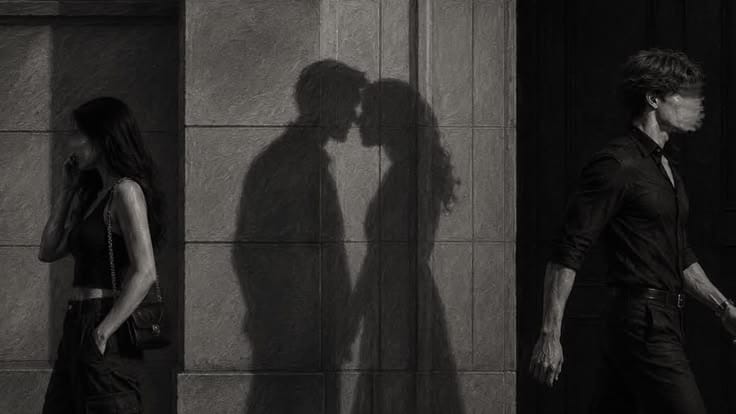
Nara met Raka the following Saturday.
They sat on a bench in a public park, away from their phones and the online courtrooms in which they had spent the past several weeks prosecuting each other.
“I’ve been thinking,” Raka began. “Maybe I’ve been defending my family’s opinions because they’re my family, not because I’ve actually examined them.”
Nara looked at him.
“And maybe you sometimes assume I believe everything they believe,” he continued. “That isn’t fair, either.”
“You’re right,” she said.
He smiled faintly. “You’re not going to argue?”
“I’m trying something new. It’s called listening.”
He laughed, and for a moment, everything felt like it used to.
They talked about the wildfires, MBG, and the responsibility of public officials. They agreed that feeding children was a good intention, but that public spending and food safety still deserved scrutiny. They discussed how political loyalty could turn reasonable people into defenders of things they would otherwise question.
Raka promised to be more critical. Nara promised to listen without immediately assuming the worst.
But promises, Nara would learn, were not the same as change.
Over the following weeks, they tried. They argued less, but the silence between their disagreements grew heavier. Raka still hesitated when his family dismissed the issues Nara cared about. Nara still found herself wondering whether he truly understood her or had simply learned which words would keep her from leaving.
She loved him. That was what made it hurt.
The final argument happened over a news report. Nara questioned the government’s handling of another public issue, and Raka sighed.
“Why does everything have to become a political argument with you?”
“Because these things affect real people, Raka.”
“I know. But you can’t spend your whole life looking for what’s wrong.”
“And you can’t keep defending things just because the people you love believe in them.”
He went quiet.
“I can change,” he finally said.
“I know you can,” Nara whispered. “But I can’t keep waiting for you to become someone you haven’t decided to be.”
“So that’s it? We’re breaking up because we disagree politically?”
“No.” Her eyes filled with tears. “We’re breaking up because I don’t want us to keep loving each other while slowly resenting who the other person is.”
Neither of them knew what else to say. They said goodbye without shouting, without deciding who had won. For once, there was no argument left to finish.
That evening, Nara found her mother sitting beside the old photograph of Adrian.
“Do you ever regret leaving him?” she asked.
Maya studied the faded picture.
“Sometimes,” she answered. “Not because I think I made the wrong choice, but because I wonder who we might have become if things had been different.”
Nara sat beside her, fighting back tears.
“I broke up with Raka.”
Maya reached for her daughter’s hand without asking why.
Outside, Jakarta continued as it always did. Politicians made promises, social media found new enemies, and somewhere, another family argued over which side of history they wanted to defend.
Tomorrow, the news would be bad again.
Nara thought about Romeo and Juliet, who had inherited a feud they never created. She used to believe their tragedy was that their families refused to let them love each other. Now she wondered whether the greater tragedy was how easily hatred could become an inheritance.
In 1998, Maya had lost Adrian while Indonesia fought to change its future. In 2026, Nara had lost Raka while Indonesia continued arguing over its own.
The politicians had changed. The headlines had changed. But the heartbreak remained strangely familiar.
Nara looked at the photograph one last time before helping her mother place it back in the box.
She still loved Raka. Perhaps a part of her always would.
But she was beginning to understand that loving someone did not mean waiting forever for them to become the person you hoped they could be.
Sometimes, love was not enough to build a future.
And sometimes, the saddest part of growing up was realizing that you could leave someone without hating them, miss them without returning to them, and wish them happiness in a life where you no longer belonged.
Tomorrow, someone would tell Indonesia to practice mindfulness in the age of bad news.
Nara hoped they would also remember to question the people making the news.
Because love did not require two people to believe in the same politician. But it did require honesty, accountability, and the courage to recognize when their values could no longer walk in the same direction.
And perhaps that was the tragedy of Nara and Raka.
They had loved each other in a country that kept asking them to choose sides.
In the end, they chose themselves.
And still, they broke each other’s hearts
*****
Produk Rekomendasi Sunday








Dapatkan informasi mengenai kesehatan mental, edukasi seksual, dan tips pelajar hanya di Majalah Sunday, teman curhat remaja Indonesia.
Ikutan berkarya di
Konten Lainnya
Terbaru
Terbaru
Dengerin Podcast
Penasaran? Yuk, tonton sekarang di YouTube!
Terpopuler
Terpopuler
Views: 2