
The Vinland Map & Viking Exploration
Penulis: Jeyano Zaidan Enggelete – Universitas Kristen Indonesia
The history of European exploration of America is often associated with Christopher Columbus and his voyage across the Atlantic in 1492. However, archaeological and historical evidence shows that Europeans had reached North America centuries earlier. One of the most controversial objects connected to this history is the Vinland Map, a map that supposedly depicts parts of North America before Columbus’s voyage. The map has attracted considerable attention because, if authentic, it could provide evidence of European knowledge of North America before 1492. However, its authenticity has been strongly questioned, meaning that other historical and archaeological evidence is more important when examining the Norse presence in North America.
Rather than relying on the Vinland Map alone, historians can examine evidence such as Norse written accounts, archaeological discoveries, and the remains of a settlement in Newfoundland. Combined, these sources provide a much stronger basis for understanding how the Vikings crossed the North Atlantic and reached North America.
Understanding the Viking Age
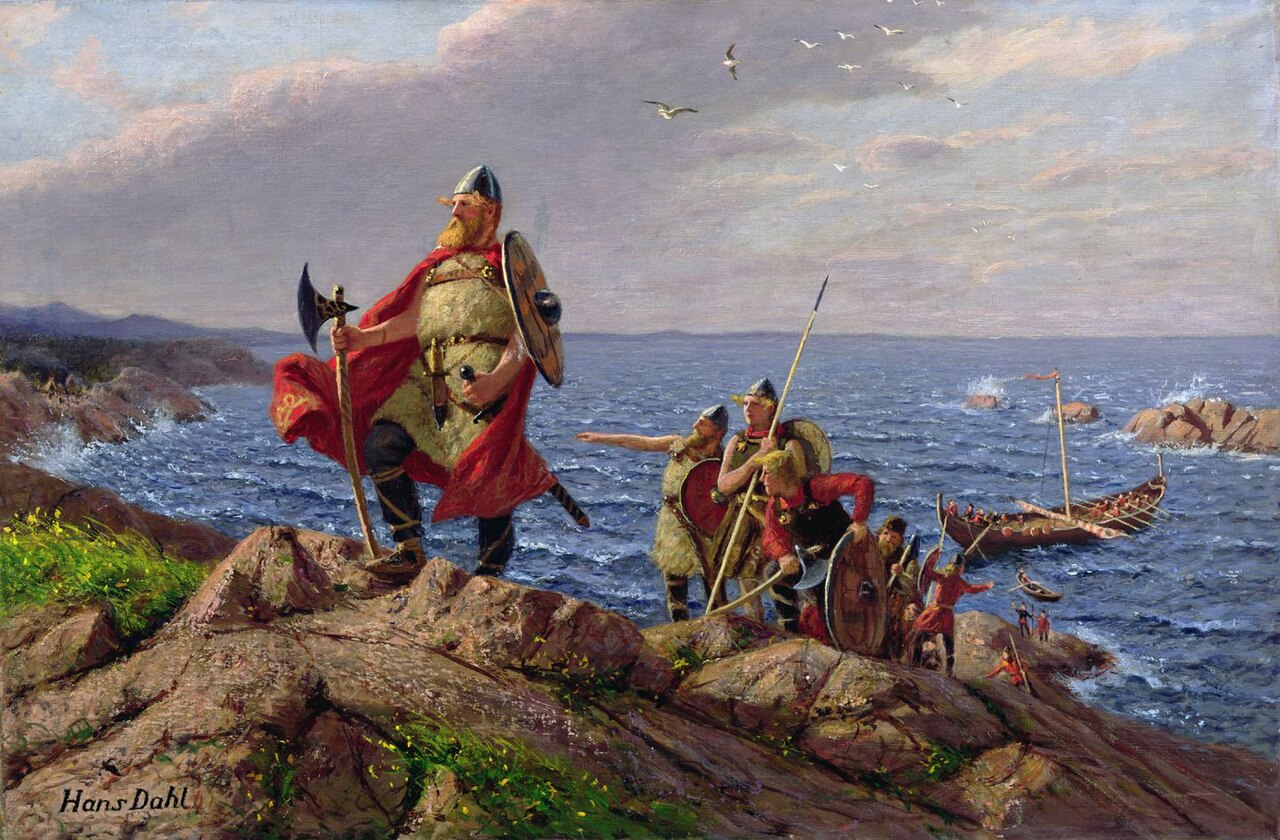
The Vikings were Scandinavian seafarers who lived primarily between the late eighth and eleventh centuries. Originating from areas that are now Denmark, Norway, and Sweden, they became known throughout Europe as raiders, traders, settlers, and explorers. Their activities eventually extended far beyond Scandinavia, reaching places such as Britain, Ireland, France, Russia, Iceland, Greenland, and North America.
Viking expeditions were motivated by several factors. Trade was an important reason for their travels, as Scandinavian merchants sought valuable goods and new markets. Settlement was another major factor, particularly as Norse communities expanded into Iceland and Greenland. Exploration also played an important role. As the Vikings became experienced sailors, they were able to travel farther then Scandinavia in search of new lands and opportunities.
Their ability to explore such enormous distances was supported by their advanced shipbuilding and navigation skills. Viking longships were designed to be durable, and capable of traveling in both open water and relatively shallow coastal areas. This allowed Norse sailors to travel between islands and along coastlines efficiently. Although they did not have modern navigational instruments such as compasses and GPS, they could use observations of the sun, stars, winds, ocean conditions, and landmarks to navigate.
These abilities allowed the Vikings to gradually expand westward across the North Atlantic.
The Journey to North America
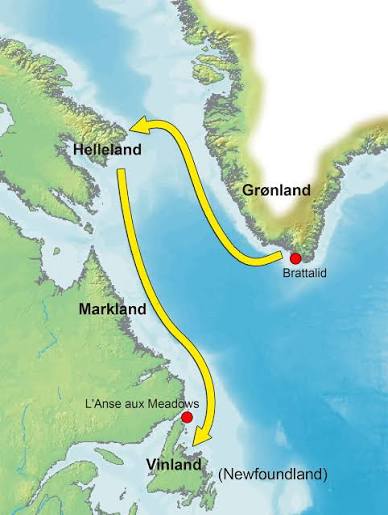
The Norse journey toward North America can be understood as a series of voyages across the North Atlantic. From Scandinavia, Norse explorers first established settlements in Iceland during the ninth century. From Iceland, they eventually traveled even farther west to Greenland.
According to the saga of Erik the Red, he played an important role in establishing a Norse settlement in Greenland. Greenland was a difficult environment to settle in, but Norse communities survived there for centuries. Once Greenland had become part of the Norse world, it provided an important base for further exploration toward lands farther west.
The Norse sagas describe several voyages toward North America. One of the best-known figures associated with these expeditions is Leif Erikson, the son of Erik the Red. According to the sagas, Leif traveled west from Greenland and encountered lands that were later referred to as Helluland, Markland, and Vinland. These locations are generally associated with parts of the eastern Canadian Arctic and Atlantic Canada, although the precise identification of every location remains debated.
The sagas provide valuable information about these voyages, but the remains of the sagas were written down centuries after the events they describe. Therefore, historians do not accept every detail as fact. Instead, the accounts can be compared with archaeological evidence. This comparison is important because archaeology provides physical evidence that Norse people did actually reach North America.
What is clear is that the Norse reached North America long before Columbus’s voyage. The evidences demonstrate that the Viking exploration of the continent was not a legend. Their journey across the North Atlantic are the earliest known examples of transatlantic European exploration.
The Viking Presence in North America
The land described in the Norse sagas as Vinland has attracted particular attention from historians. The name is often interpreted as meaning “land of wine” or “land of grapes,” although its precise meaning and the nature of the region described in the sagas remain subjects of discussion. Regardless of the exact meaning of Vinland, the most important evidence for Norse exploration in North America comes from archaeology.
The strongest evidence is found at L’Anse aux Meadows, located at the northern tip of Newfoundland in present-day Canada. Archaeological excavations at the site uncovered the remains of structures associated with Norse settlement. These included buildings with characteristics consistent with Norse architecture as well as objects and evidence of activities associated with Scandinavian inhabitants.
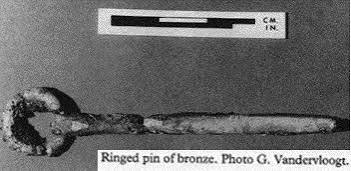
L’Anse aux Meadows is particularly significant because it provides physical evidence that Norse people were present in North America. The site is generally dated to around the year 1000, placing the Norse presence approximately five centuries before Columbus’s voyage.
The archaeological evidence also suggests that L’Anse aux Meadows was not a large nor a permanent colony. Instead, it may have functioned as a temporary settlement or base for exploration and activities in the surrounding region. The location would have provided access to natural resources and served as a useful point from which Norse explorers could investigate areas farther south.
The Norse presence also raises questions about their encounters with Indigenous peoples. The sagas describe encounters between Norse explorers and people they called Skrælingar. These accounts are difficult to interpret completely, and the terminology used by the Norse does not provide a simple modern identification. The existence of Indigenous populations in the region means that Norse explorers entered an already inhabited area
The Vinland Map Controversy
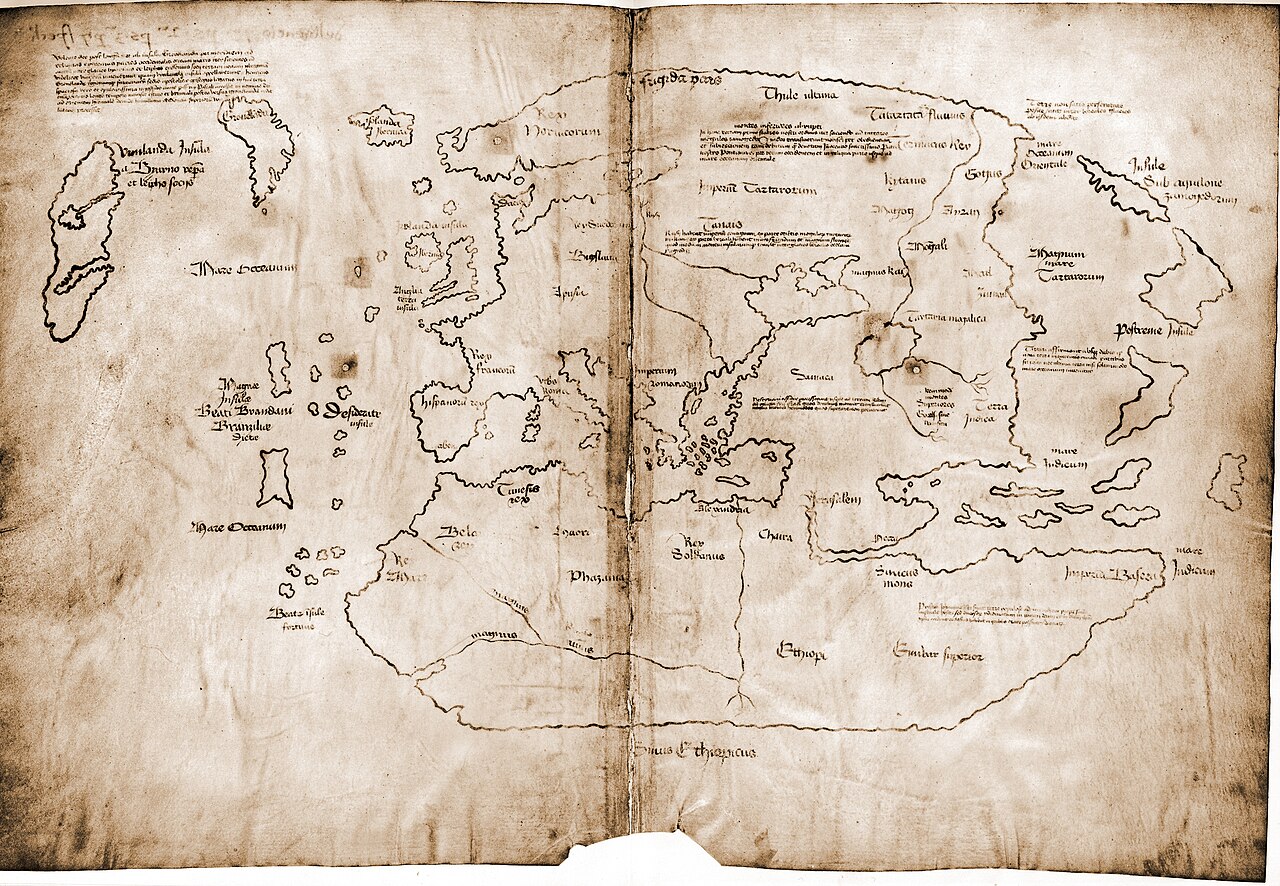
The Vinland Map became famous in the twentieth century because it appeared to show part of North America, including an area identified as Vinland, before Columbus’s voyage. If the map were genuinely medieval, it could have provided an intriguing indication that European geographical knowledge of North America existed before 1492.
However, the map’s authenticity has been heavily disputed. Researchers have investigated its history, physical materials, and ink in an attempt to determine when it was produced. Scientific examination became especially important because the map’s appearance alone could not establish its age.
In 2021, researchers at Yale University reported evidence that the ink used on the map contained a pigment associated with modern production. Their analysis concluded that the map was a modern fake rather than an authentic medieval map. This finding significantly weakened the argument that the Vinland Map represents genuine pre-Columbian European knowledge of North America.
The questionable authenticity of the Vinland Map does not mean that Viking exploration of North America was false however. The archaeological evidence from L’Anse aux Meadows exists independently of the map. The Norse sagas also provide historical accounts that can be compared with archaeological discoveries.
Separating Historical Evidence from Speculation
The story of Viking exploration demonstrates why historians must distinguish between evidence and speculation. The Vinland Map may be fascinating, but it should not be treated as the primary proof that Vikings reached North America. Instead, archaeological evidence provides a much stronger foundation for this conclusion.
The Norse sagas, particularly The Saga of the Greenlanders and Erik the Red’s Saga, describe voyages toward lands west of Greenland. These accounts contain information about explorers such as Leif Erikson and other Norse travelers. However, because the sagas were written down long after the events they describe, they must be examined critically rather than accepted as completely accurate historical records.
Archaeology provides an important independent source of evidence. The discovery of L’Anse aux Meadows demonstrates that Norse people were physically present in North America around the beginning of the eleventh century. This evidence supports the general historical picture presented by the sagas, even though some details of the voyages remain uncertain.
There are therefore several things that can be considered established with a good amount of confidence: Norse people settled Greenland, Norse explorers traveled westward from Greenland, and Norse people established a settlement at L’Anse aux Meadows in North America around the year 1000. Other questions remain less certain, including the exact routes of individual voyages, the precise location of the place described as Vinland, and the details of interactions between Norse explorers and Indigenous peoples.
The Viking journey to North America was the result of generations of exploration across the North Atlantic. From Scandinavia to Iceland, from Iceland to Greenland, and eventually from Greenland to North America, the Norse gradually pushed farther west using their ships, navigational knowledge, and experience as master seafarers. The archaeological evidence at L’Anse aux Meadows confirms that Norse explorers reached North America around five centuries before Columbus.
The Vinland Map, meanwhile, presents a different story. Although it was once considered potentially important evidence of pre-Columbian European knowledge of America, scientific investigation has raised serious doubts about its authenticity. Its controversial status demonstrates why historians must rely on multiple forms of evidence rather than allowing a single artifact to determine our understanding of the past.
Produk Rekomendasi Sunday





*****

Dapatkan informasi mengenai kesehatan mental, edukasi seksual, dan tips pelajar hanya di Majalah Sunday, teman curhat remaja Indonesia.
Ikutan berkarya di
Konten Lainnya
Terbaru
Terbaru
Dengerin Podcast
Penasaran? Yuk, tonton sekarang di YouTube!
Terpopuler
Terpopuler
Post Views: 5